
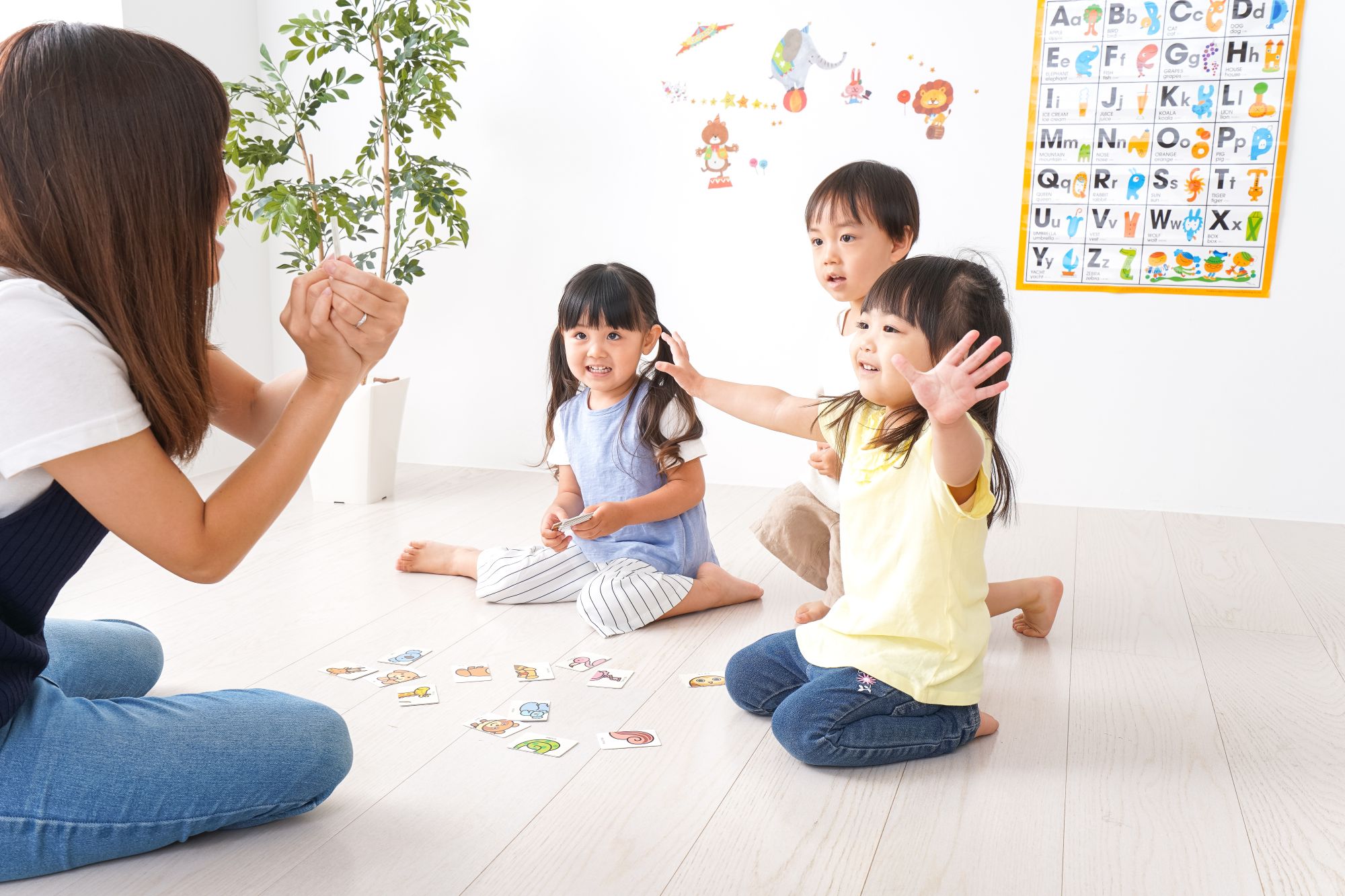

Young children often have shorter attention spans as the prefrontal cortex – the part of the brain that supports focus, self-control, and problem-solving – is still developing. This means that pre-schoolers often need support to sustain their attention in home and learning environments. Through engaging activities and consistent support within their natural environment, children can gradually strengthen their ability to focus, laying the foundation for future learning and social success. SPD’s occupational therapist Jacintha Goh shares strategies on how parents can support their pre-schooler’s attention skills at home.
What is attention?
There are four types of attention: sustained, selective, divided, and alternating. Each of them contributes to different aspects of learning and daily life. Understanding these different types helps parents identify where their child’s strengths lie and where they may need extra support, especially since pre-schoolers are still developing their attention skills.
- Sustained attention: Focusing on a task for a period of time (e.g., listening to a story).
- Selective attention: Tuning out distractions (e.g., ignoring background noise).
- Divided attention: Doing two things at once (e.g., drawing while talking).
- Alternating attention: Shifting focus between tasks (e.g., playing, then responding to instructions).
Attention span by age for pre-schoolers
Children’s ability to focus improves as they grow older. This change is shaped by brain development, the child’s surroundings, and what interests them. While every child is unique, here is a rough guide on how long pre-schoolers can usually stay focused at one time.7
- 2 years: 4–6 minutes
- 3 years: 6–8 minutes
- 4 years: 8–12 minutes
- 5 years: 10–14 minutes
- 6 – 7 years: 12-18 minutes
These are just averages. Some children may focus longer, especially when they understand the activity and enjoy doing it.
What affects attention in pre-schoolers?
- Arousal level (energy level): Too low (tired or disengaged) or too high (fidgety or restless). Calm-alert state is ideal for learning10
- Basic needs: Tired, hungry and/or emotionally dysregulated children struggle to focus6
- Distractions: Noisy or busy environments make it harder to focus as children are still refining the ability to filter distractions9
- Screen time: Fast-moving shows/games can shorten attention span 4
- Movement: Movement regulates arousal, while prolonged inactivity can lead to low energy or restlessness, disrupting focus and attention1,5
Strategies to support different types of attention in pre-schoolers
1. Sustained attention
- Introduce routines: Predictable schedules reduce uncertainty and mental overload. When children know what they have to do, it helps them stay engaged for longer periods 8
- Give movement breaks: Short burst of physical activities in between routines or tasks (e.g. 3 – 5 minutes of animal walks / star jumps / wheelbarrow walk) can prevent fatigue and help children re-focus for longer tasks8
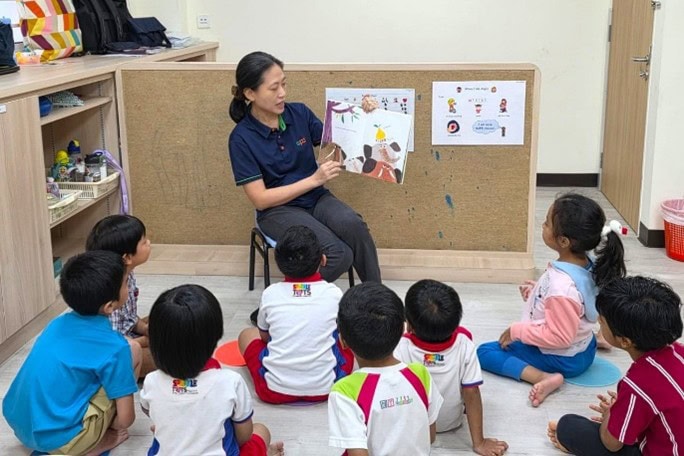
- Make learning fun: Engaging hands-on activities capture interest, encouraging children to stay on task longer (e.g. interactive storytelling, sensory letter tracing)11
2. Selective attention
- Minimise distractions: A quiet, clutter-free space helps children focus on what is important and ignore irrelevant stimuli2
- Reduce screen time: Replacing screens with calm, focused activities such as reading can help children learn to filter out distractions3
3. Divided attention
- Build focus with fun and games: Games that require listening, moving, and responding (e.g., Simon Says) promote attention across multiple tasks.
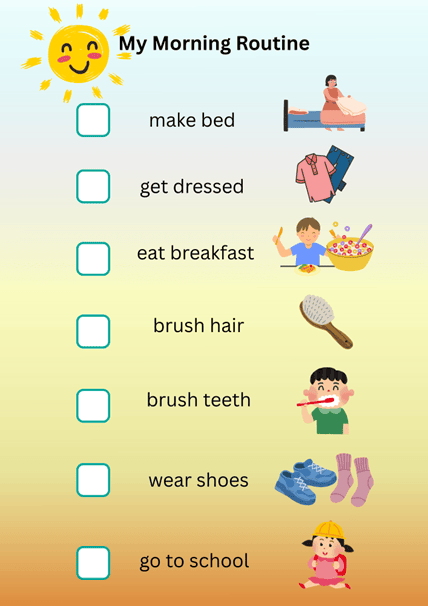
- Establish daily routines: Familiar patterns help children juggle multiple activities by reducing cognitive load. For example, using a fixed song during transition or clean-up time, or a visual schedule to guide rotation between different routines.
4. Alternating attention
- Incorporate movement: Shifting between physical and cognitive tasks trains the brain to switch attention smoothly. For instance, having themed movement breaks that involve a movement activity tied to the story or schedule (e.g., jungle animals = animal walks; space = rocket jumps)
- Learn through play: Activities with changing roles or steps (e.g., turn-taking games) help children practise switching their focus.
Cover photo credit: Shutterstock
References
- Best, J. R. (2010). Effects of physical activity on children’s executive function: Contributions of experimental research on aerobic exercise. Developmental Review, 30(4), 331–351. https://doi.org/10.1016/j.dr.2010.08.001
- Fisher, A. V., Godwin, K. E., & Seltman, H. (2014). Visual environment, attention allocation, and learning in young children: When too much of a good thing may be bad. Psychological Science, 25(7), 1362–1370. https://doi.org/10.1177/0956797614533801
- Jourdren, M., Bucaille, A., & Ropars, J. (2023). The Impact of Screen Exposure on Attention Abilities in Young Children: A Systematic Review. Pediatric neurology, 142, 76–88. https://doi.org/10.1016/j.pediatrneurol.2023.01.005
- Panjeti‑Madan, V. N., & Ranganathan, P. (2023). Impact of screen time on children’s development: Cognitive, language, physical, and social and emotional domains. Multimodal Technologies and Interaction, 7(5), https://doi.org/10.3390/mti7050052
- Pellegrini, A. D., & Smith, P. K. (1998). Physical activity play: The nature and function of a neglected aspect of play. Child Development, 69(3), 577–598. https://doi.org/10.1111/j.1467-8624.1998.tb06226.x
- Reynaud, E., Vecchierini, M.-F., Heude, B., Charles, M.-A., & Plancoulaine, S. (2019). Sleep and its relation to cognition and behaviour in preschool‑aged children: A systematic review.
- Ruff, H. A., & Rothbart, M. K. (1996). Attention in early development: Themes and variations. Oxford University Press.
- Schmidt, M., Benzing, V., & Kamer, M. (2016). Classroom-based physical activity breaks and children’s attention: Cognitive engagement works! Frontiers in Psychology, 7, 1474. https://doi.org/10.3389/fpsyg.2016.01474PubMed+4Current Issues in Sport Science+4SCIRP+4
- Wong‑Kee‑You, A. M. B., Tsotsos, J. K., & Adler, S. A. (2018). Development of spatial suppression surrounding the focus of visual attention.
- Yerkes, R. M., & Dodson, J. D. (1908). The relation of strength of stimulus to rapidity of habit‑formation. Journal of Comparative Neurology and Psychology, 18, 459–
- Yogman, M., Garner, A., Hutchinson, J., Hirsh-Pasek, K., & Golinkoff, R. M. (2018). The power of play: A pediatric role in enhancing development in young children. Pediatrics, 142(3), e20182058. https://doi.org/10.1542/peds.2018-2058AAP Publications