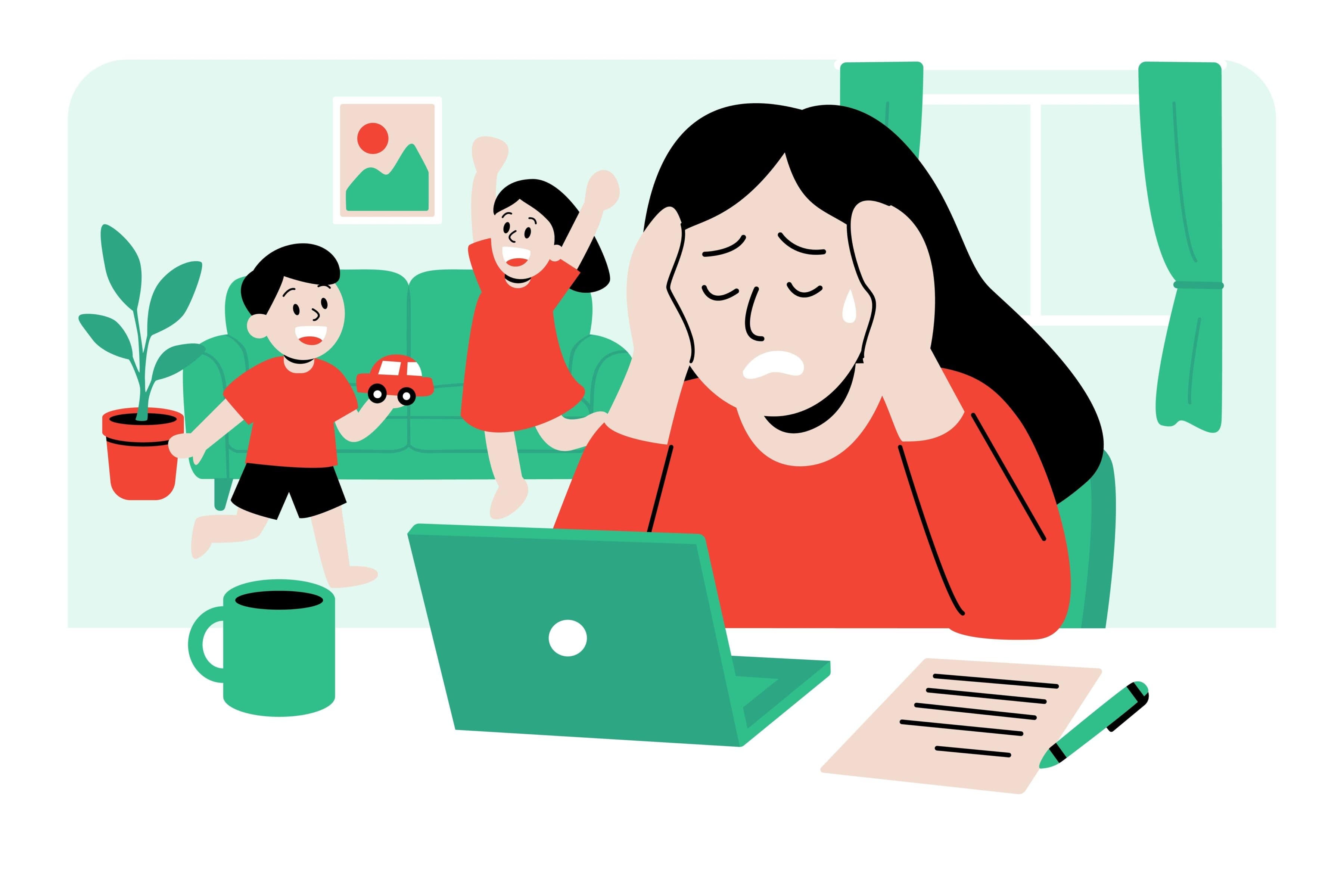

For caregivers, stress is often part of daily life. Signs like constant fatigue, sleep issues or anxiety could be our body’s way of telling us to pause and recharge. In this article, SPD’s social worker Jasmine Mok shares tips on recognising stress symptoms and ways to keep stress in check.
Stress is not always bad. It is the body’s natural response to challenges, releasing hormones like cortisol, a chemical that helps us to stay alert, focused, and energised (Selye, 1936). This can be helpful in small doses. But when stress builds up, it can lead to fatigue, anxiety, and health issues. 4,5
Because stress often feels abstract, it helps if we can picture it more concretely. A simple way to make sense of it is through the Bucket analogy8,9, which shows us how stress accumulates and how we can cope with it.
The Rain, Bucket, Umbrella, and Tap
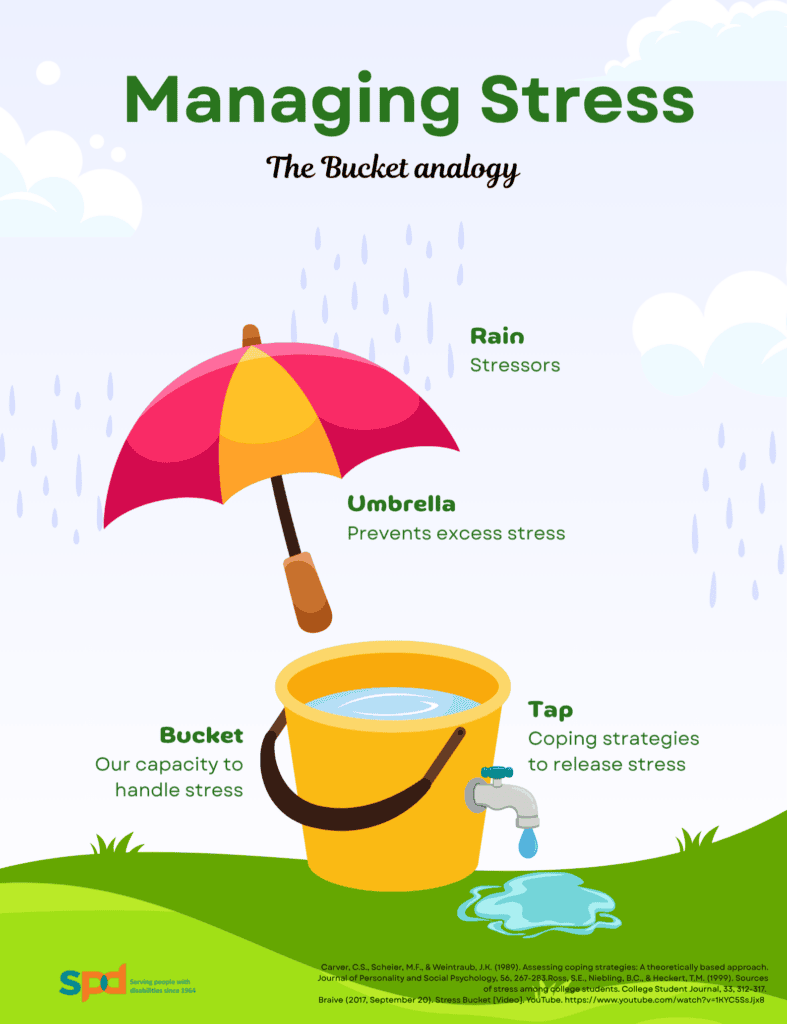
The bucket analogy shows us how stress can accumulate and how we can release it.
1) Rain – Stressors
Rain represents the various stressors we face, which can come from many sources such as work pressures, caregiving responsibilities, and emotional demands.
2) Bucket – Our capacity to handle stress
The bucket symbolises our capacity for stress. Everyone’s bucket is different – some may be larger, some smaller. The key is knowing our own capacity and recognising when it is getting full by paying attention to our physical and emotional cues.
3) Umbrella – Prevents excess stress
While we often focus on ways to reduce stress, the umbrella represents prevention -shielding ourselves from excessive stress before it enters the bucket.
4) Tap – Stress relief strategies
The tap represents the ways we release stress and prevent our bucket from overflowing.
Putting the analogy into practice
Let us now see how we can use this analogy to manage stress in three simple steps.
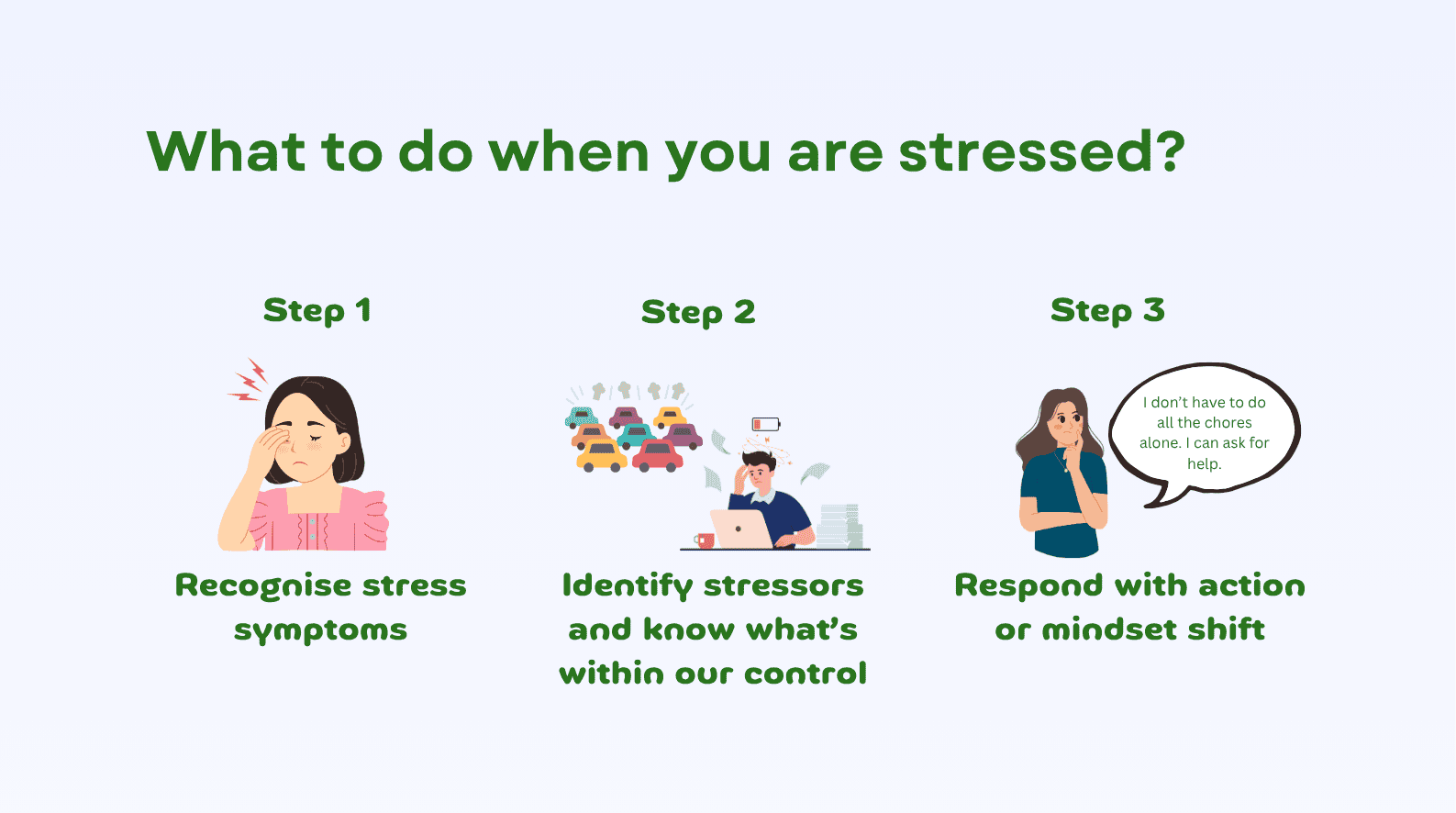
Step 1: Recognise stress symptoms
As the rain (stressors) falls, your bucket starts to fill. Pay attention to the signs1,7 that your bucket is filling up:
- Physical: Headaches, fatigue, stomach discomfort
- Emotional: Anxiety, irritability, overwhelmed
- Cognitive: Forgetfulness, poor concentration
- Behavioural: Sleep issues, appetite changes
These are early signals that you need to act before it overflows.
Step 2: Identify what stressor(s) are within your control
The rain (stressors) can come from many places2,3:
- Environmental: Noise, traffic, weather
- Social: Relationship challenges, lack of support
- Physiological: Hormonal changes, lack of sleep
- Cognitive: Negative self-talk, perfectionism, worries
Ask yourself: What can you control, and what is beyond your control? This helps you focus on the things you can influence, taking actionable steps to manage and alleviate stress.
Step 3: Respond with action or mindset shift
When you know what is filling your bucket, you can manage it by strengthening your umbrella (protect against excessive stress) or turning on the tap (releasing stress from the bucket).
a) The Umbrella = Protective Factors
An umbrella doesn’t stop the rain, but it prevents too much water from entering your bucket. Strengthening your umbrella means building habits and supports that shield you:
- Understanding your limits: Learn to recognise how much you can realistically handle in a day or week. Pay attention to your own signs of being overwhelmed—such as irritability, fatigue, or difficulty concentrating—and take these signals seriously.
- Setting boundaries: Practise saying “no” or “not right now” when needed. Protect your personal time, especially for rest and recharging. Be clear about your capacity and avoid overcommitting. Boundaries are not barriers; they are acts of self-care.
- Prioritising and delegating: Focus on what truly matters. A simple “Must Do, Should Do, Could Do” framework can help organise your day. Delay or drop non-urgent tasks and share responsibilities when possible. It’s okay not to do everything all at once, or by yourself.
- Proactive self-care: This includes two key elements: maintaining healthy routines and making time for rest.
- Maintaining healthy routines: Consistent sleep, balanced nutrition and regular physical activities can build mental and physical resilience to stress. A structured morning and evening routine provides stability and control.
- Make time for breaks: Don’t wait until you’re exhausted to rest or take a break. Intentionally schedule self-care moments throughout the day or week.
b) The Tap = Stress-relief methods
Every bucket needs a way to let water out. A tap represents the activities that release stress:
- Focus on forming solutions based on what you can control, instead of what is beyond your control For instance,
 |  |
| Cognitive stressor: From: “My child is not progressing as fast in class as I hope for.” To: “Every child learns at their own pace. Effort and progress matter more than perfection.”
| Environmental stressor: From: “It’s hard to bring my child to school when it’s raining heavily.” To: “I can’t control the weather, but I can adjust by leaving earlier, taking a sheltered route or planning for alternative routes in advance.” |
- Engage in enjoyable activities – Even a few minutes can make a difference in reducing stress. This could be listening to a favourite song, watching an episode of a comforting show, savouring a cup of tea, journaling, or doodling.
- Get active – Exercise releases endorphins (the “feel good” hormone) which can help to elevate mood.
- Be present – Mindfulness exercises, such as grounding using the five senses, help reduce anxiety and bring calm. Here is how you can do it by noticing:
- 5 things you can see
- 4 things you can hear
- 3 things you can feel
- 2 things you can smell
- 1 thing you can taste
- Connect with others such as a friend or loved one can provide some reassurance and relief.
- Seek professional help – There is no shame in reaching out. Professional support and helplines can be a valuable resource. Here are some helpful hotlines:
- Samaritans of Singapore (SOS) – 24/7
- For emotional distress and suicide prevention.
- 1767 (24/7) | https://www.sos.org.sg
- Silver Ribbon Singapore
- Mental health education, support groups, and counselling.
- 6386 1928 | https://www.silverribbonsingapore.com
- Caring SG
- Support for caregivers caring for individuals with special needs
- 80233150 | https://www.caring.sg/
Caring for others is deeply rewarding, but it can also be demanding. While stress will always be part of our journey, what is key is how we manage it.
Remember: you don’t have to carry the load alone. Reaching out for help, setting boundaries, or even taking a few minutes to recharge can make a difference. Self-care is not a luxury; it is what gives us strength to keep caring for those who matters most.
References
- Kelso, T., French, D. J., & Fernandez, M. (2005). Stress and coping in primary caregivers of children with a disability: A qualitative study using the Lazarus and Folkman process model of coping. Journal of Research in Special Educational Needs, 5(1), 3–10. https://doi.org/10.1111/j.1471-3802.2005.00033.x
- Lazarus, R. S., & Folkman, S. (1984). Stress, appraisal, and coping. Springer Publishing.
- Lovell, B., Moss, M., & Wetherell, M. A. (2012). With a little help from my friends: Psychological, endocrine and health corollaries of social support in parental caregivers of children with autism or ADHD. Research in Developmental Disabilities, 33(2), 682–687. https://doi.org/10.1016/j.ridd.2011.11.014
- Pinquart, M., & Sörensen, S. (2003). Differences between caregivers and noncaregivers in psychological health and physical health: A meta-analysis. Psychology and Aging, 18(2), 250–267. https://doi.org/10.1037/0882-7974.18.2.250
- Schulz, R., & Sherwood, P. R. (2008). Physical and mental health effects of family caregiving. The American Journal of Nursing, 108(9 Suppl), 23–27. https://doi.org/10.1097/01.NAJ.0000336406.45248.4c
- Selye, H. (1936). A syndrome produced by diverse nocuous agents. Nature, 138(3479), 32. https://doi.org/10.1038/138032a0
- Vitaliano, P. P., Zhang, J., & Scanlan, J. M. (2003). Is caregiving hazardous to one’s physical health? A meta-analysis. Psychological Bulletin, 129(6), 946–972. https://doi.org/10.1037/0033-2909.129.6.946
- Carver, C.S., Scheier, M.F., & Weintraub, J.K. (1989). Assessing coping strategies: A theoretically based approach. Journal of Personality and Social Psychology, 56, 267-283.Ross, S.E., Niebling, B.C., & Heckert, T.M. (1999). Sources of stress among college students. College Student Journal, 33, 312-317.
- Braive (2017, September 20). Stress Bucket [Video]. YouTube. https://www.youtube.com/watch?v=1KYC5SsJjx8
Cover photo credit: Shutterstock