
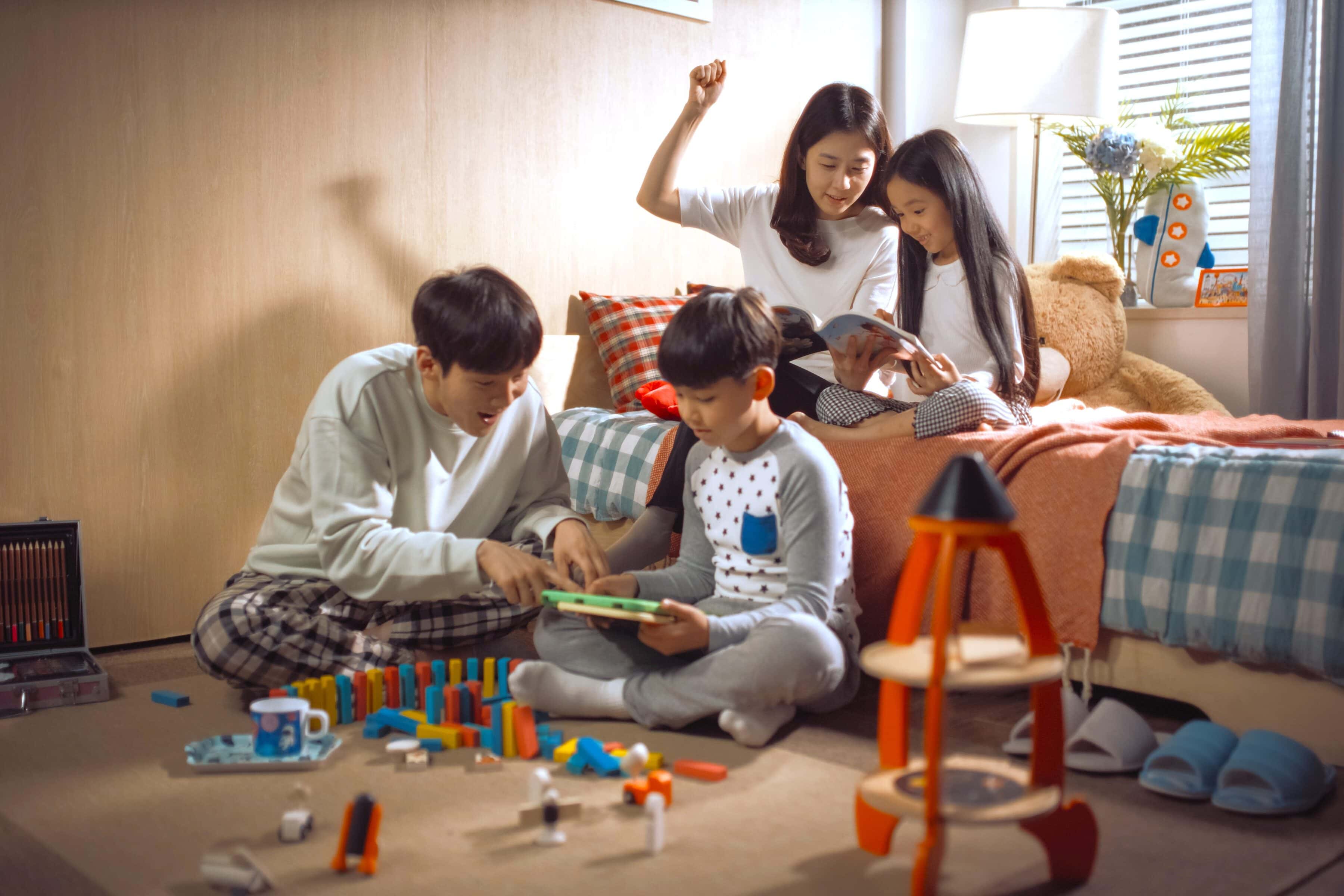
Some children find it difficult to focus on monotonous tasks. However, many studies have shown that when children engage in multisensory learning – such as learning through multiple senses such as sight, sound, touch, and movement – their language, cognitive, social, and emotional development skills are significantly enhanced.
SPD’s speech therapist Cherisse Chong explains how a multisensory approach enriches comprehension and leads to more lasting and impactful learning.
How multisensory learning supports language
Multisensory experiences promote understanding and retention. When parents introduce an unfamiliar word in a multisensory context to their children, they experience the word in different ways. This reinforces their understanding and encourages deeper learning.
This learning method also encourages engagement because the child must pay attention to each sensory cue that accompanies the new vocabulary.
Engaging different senses to teach language in everyday activities
Parents and caregivers can incorporate multisensory learning into daily routines to model language and create opportunities for children to use words they have learnt. Here are some examples:
Auditory (hearing)
- Sing familiar songs and nursery rhymes containing repeated phrases, such as Old MacDonald Had a Farm, Five Little Monkeys, and Walking in the Jungle. These songs provide repeated auditory patterns. Pausing before predictable words encourages your child to fill in the missing phrase, such as “We’re not… afraid!”
- Add fun sounds such as saying “Brr, it’s so cold” when showing a picture scene of snow.
- Repeat and emphasise words in everyday conversations such as “ON the table” or “ON the bed”.
Visual (seeing)
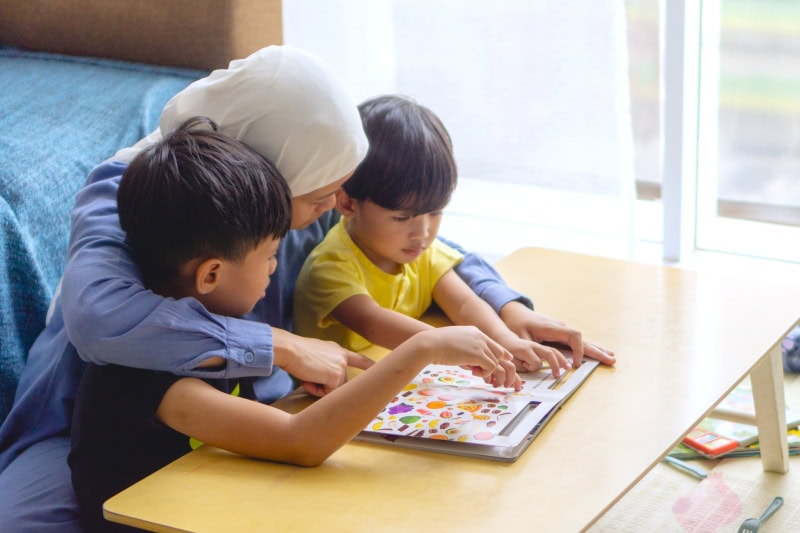
- Point to pictures in picture books and label the characters, their actions or descriptive words you use to talk about them.
- Use exaggerated facial expressions to represent different emotions and connect them to feeling words, such as frowning when reading the word “angry”.
Tactile (touching)
- Use textured books such as That’s Not My Bear or Never Touch a Shark to get the child to feel the different materials. Say “that’s a fluffy tummy!” or “these are bumpy paws”.
- Teach descriptive words by getting your child to feel textures and physical properties of objects around, such as saying “cold” when touching ice cubes or “rough” when touching sand or orange peels.
Proprioception (awareness of space and movement)
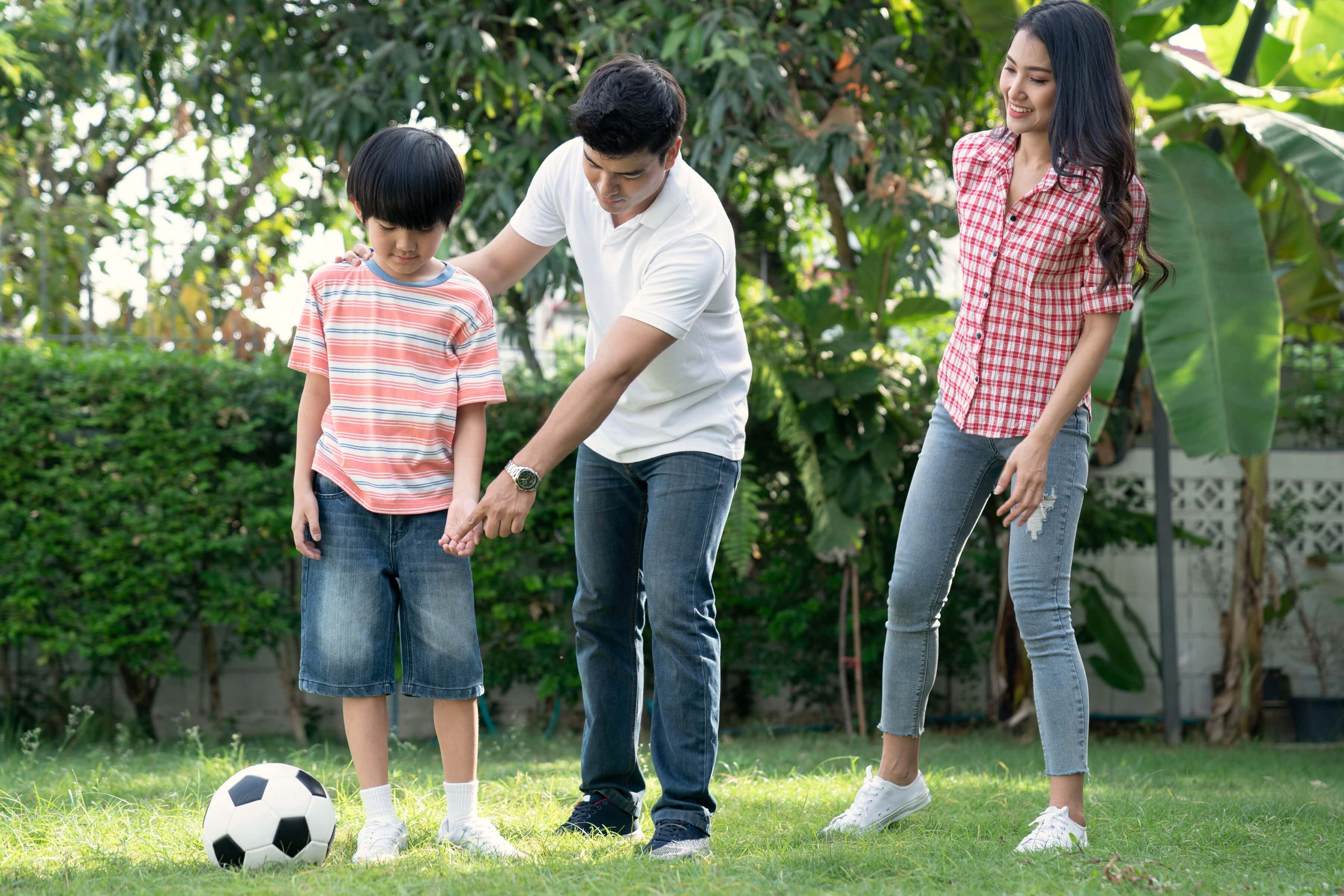
- Pair words with gestures and actions for your child to imitate. For example, “cold” with shivering motion or “pull” by stretching hands to the side. Teach words while engaging in physical play or outdoor activities such as “throw”, “catch”, or “kick”.
- Teach prepositions like “under the table” or “stand in front of me” when interacting with people and objects in the environment
Olfactory and Gustatory (smelling and tasting)

- Model descriptive words while getting your child to smell and taste different food and drinks. Say “crunchy” when eating a carrot or apple.
Putting it together!
There are different ways that parents can include multisensory engagement in everyday activities. For example, your child can touch different surfaces and objects during shower time or outdoor play.

Parents can turn everyday moments into fun learning opportunities. At the playground, make sensory exploration fun by asking your child to find something with a specific texture. They can hunt for something rough like a tree branch or a rock. Your child is encouraged to use their sense of sight and touch, while also building spatial awareness.
Mealtimes can also be another perfect opportunity to engage children’s senses. By cooking or preparing foods with a variety of textures, children explore different sensations through touch, smell and taste.
Using a multisensory approach in everyday activities helps children experience language in fun and meaningful ways. Get creative and explore different ways to help your child experience language through multisensory learning.
References
Yuanzhe Li (2024) Beyond play: a comparative study of multi-sensory and traditional toys in child education.
Tubele, S. (2022). Multisensory Approach in Speech Therapy for Preschool Children. To Be or Not to Be a Great Educator, 815–823.
Elleseff, T. (2011, November 4). Speech-language activity suggestions for multisensory stimulation of at-risk children. ASHA.