



Does your household feel like a constant scramble when it comes to homework or playtime? Establishing routines for children is a powerful way to promote security and understanding in their everyday lives. The predictability of a routine helps children feel more confident and calmer as they navigate through their day. In this article, SPD’s lead teacher Hasliah Hashim and senior teacher Shahirah Binti Abdul Rahman outline the benefits of routines and how parents and caregivers can implement them, offering structure and flexibility to suit individual needs.
Importance and Benefits
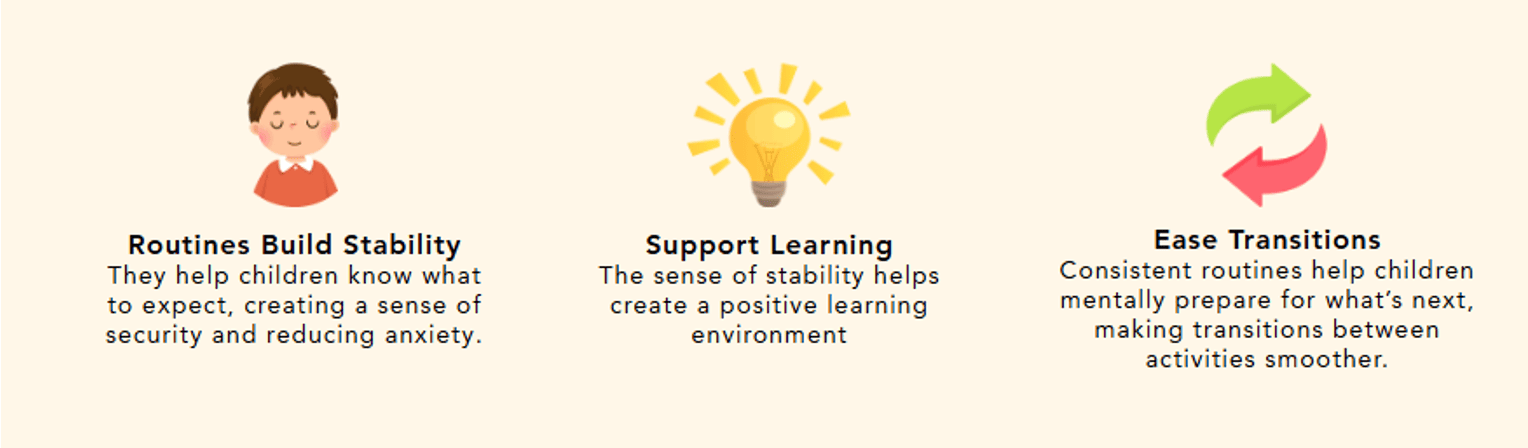
Routines help children understand what to expect, promoting a sense of stability. This stability can help reduce anxiety and create a positive environment for learning and development. For example, knowing that there is snack time the moment the child arrives home will provide security. This prevents meltdowns caused by uncertainty.
Children can mentally prepare for each phase of the day when it follows a predictable pattern. Predictability can make transitions between activities smoother, whether it is from morning to afternoon or transitioning from playtime to bedtime. This sense of order makes children feel safer and more secure in their environment.
How to achieve routines
- Building on existing routines
Incorporating routines does not require creating new activities. Instead, build upon what is already part of everyday life. Whether it is morning chores, meals or playtime, these activities can be structured to form a routine that offers predictability for the child. - Teamwork makes the routine work
Besides parents, others including caregivers, siblings, and even extended family members can play a role in maintaining consistency. It is important to ensure everyone involved understands the rhythm of the routine, so the child experiences it cohesively, regardless of who is overseeing it at that moment.
- Implementing routines beyond home
Routines do not have to be confined to just at home. They can take place at a childcare centre, with relatives, or even when they are out and about. The key is ensuring that the core structure remains consistent, and wherever the child goes, they can anticipate a similar flow to their day.
- Use of visuals
Visual aids such as timetables with simple pictures or photos can make routines clearer for your child. With a timetable, they can see the order of events, which provides additional clarity and reinforces the predictability aspect of the routine.
An example of family routine during the weekday can look like this:

Key Takeaways
- Ensure consistency as much as possible
Routine is only effective if it remains consistent. Children thrive on knowing what to expect, and consistency helps reinforce their understanding of time and expectations.
- Use pockets of time that we have to engage children
Many everyday moments, even brief ones, offer powerful opportunities to engage with the child and reinforce the routine. For instance, while waiting in line at the grocery store, parents can review the visual schedule together as a family. - Rewarding hard work
Incorporating rewarding activities like playtime, story time or a favourite activity into the evening can help smooth the transition after a long day and create positive associations with the end of the workday. This approach creates positive associations with completing necessary tasks, giving children something exciting to look forward to. For example, if tidying up is a struggle, establish that tidying time is directly followed by story time or play time.
Embarking on this journey as a family
Parents should remember that building a routine takes time. The goal is to create a supportive structure that integrates seamlessly into the family’s dynamic. The most effective routines offer stability and predictability for the child, while remaining flexible enough to adapt as their needs change. As parents navigate this process, remember to celebrate small victories and adjust routines when necessary.