
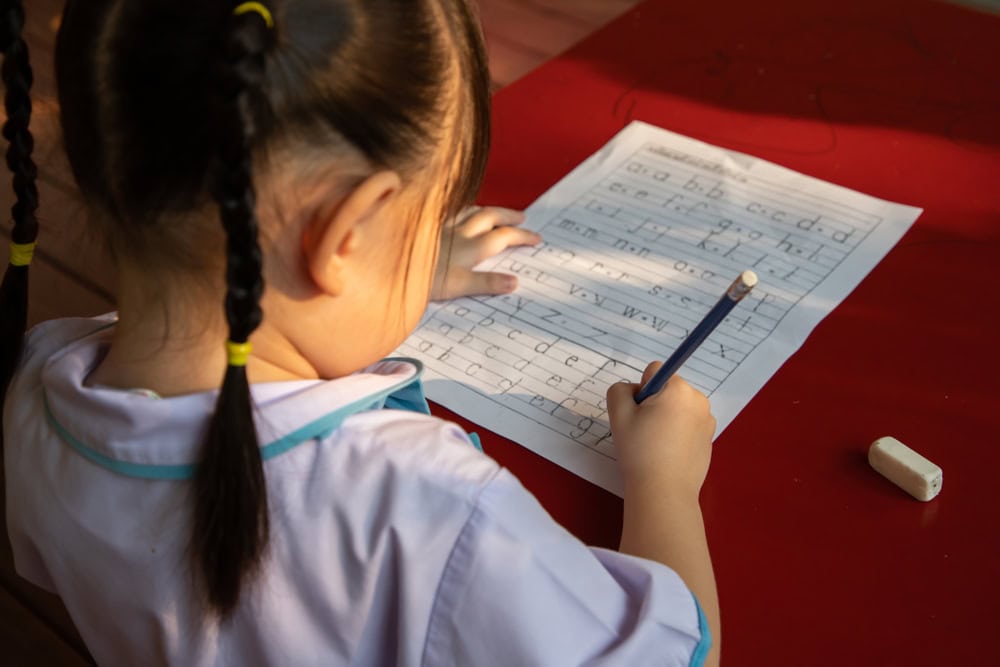

Literacy is the ability to recognise letters and sounds, and use reading and writing to communicate. It is the foundation of a child’s academic and personal growth. While schools play a crucial role in introducing children to literacy through a structured curriculum, children also need a playful and supportive home environment to build early literacy skills. It is a skill that children develop best with consistent exposure at home.
SPD learning support educator Vivian Chong shares some fun, everyday activities that parents can do with their children to build strong reading and writing skills, setting them up for lifelong success.
Letter recognition activities
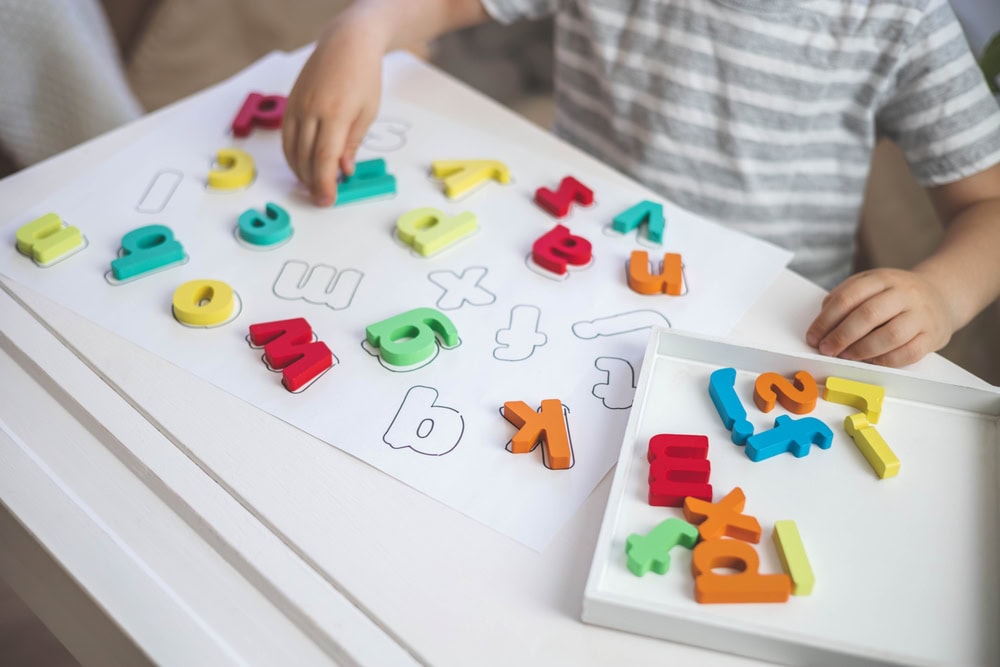
Goal: Help your child recognise and name letters confidently.
1. Alphabet magnet play (above): Stick magnetic letters on your fridge or a metal tray. Ask your child to match them to flashcards or identify letters from their name.
2. Letter hunt: Hide letter cards or magnetic letters in drawers, cupboards, or under cushions. Call out a letter for your child to find. Example: “Can you find the letter M in the bedroom?”
3. DIY letter wall: Create a “Letter of the Week” wall by attaching letters to the wall using tape or blue tack. Add cut-out letters from magazines or home-printed versions for daily exposure. Let your child decorate them with drawings or cut-outs of things that start with that letter. Example: “A is for apple, airplane, ant!”
4. Form letters with household items: Use LEGO bricks, straws, pasta or strings to form letter shapes. This hands-on activity builds letter recognition and fine motor skills by encouraging children to explore the shapes of letters through tactile experiences. Example: “Let’s build the letter H with your blocks!”
5. Write letters using cotton buds: Dip cotton buds in coloured water or paint to write letters on cardboard or recycled paper. Say the letter aloud as your child paints.
Activities for letter sounds and phonemic awareness
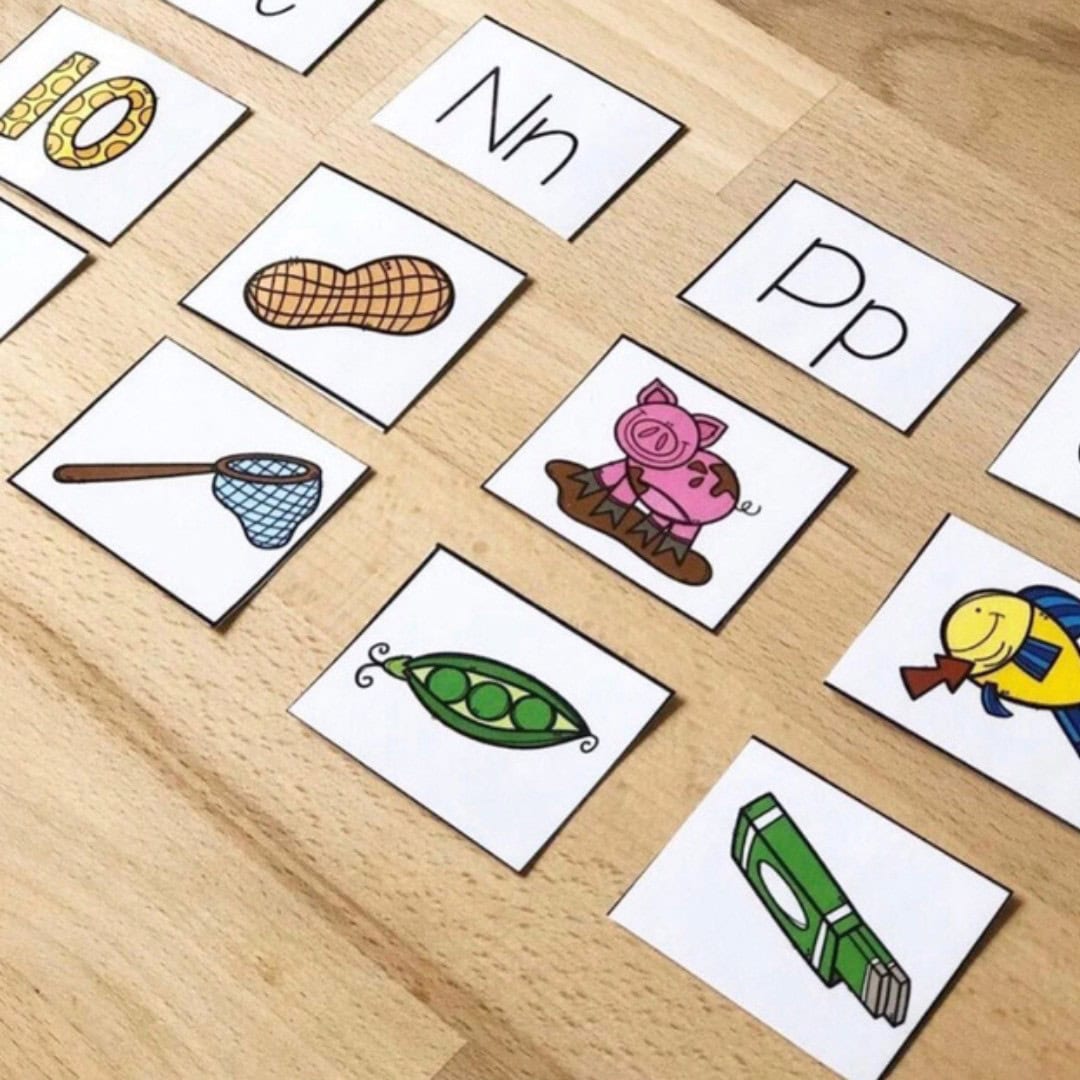
Goal: Help your child hear and say sounds that letters make. Before children learn to read, they first learn to hear the sounds in spoken words. This skill is called phonemic awareness. When they learn the sounds that letters make, they begin connecting sounds to text.
1. Hopscotch phonics: Create a simple hopscotch grid using masking tape (indoors) or chalk (corridor). Label each square with a letter. Say a sound, and your child jumps to the matching letter.
2. Story sound hunt: Read a story aloud and ask your child to listen for a target sound (e.g. /s/), and they have to clap or raise their hands every time the sound is heard.
3. Sound sorting (above): Use plastic cups, ice cream tubs or tissue boxes as containers and label each one with a different letter. Have your child sort toys or pictures into the correct containers based on their beginning sounds (e.g. “/b/” or “/s/”).
4. Mystery bag game: Fill a bag with small items such as a spoon, ball or apple. Let your child pick out one object at a time and name the beginning sound. Example: “Ball starts with /b/. What else starts with /b/?”
5. Bubble sound pop: Blow a bubble and say a letter sound (e.g. “/m/”). When your child pops the bubble, have them say a word that begins with that sound (e.g. “/m/ monkey!”).
6. “Phone a sound” pretend game: Pretend to call each other using a toy phone, hand gestures (thumb and pinky finger as a phone), or even a paper cup with string. Start by saying a letter sound (e.g. “Hello! I’m calling with the letter sound /d/”). Then let your child answer with a word that begins with that sound (e.g. “dog”). Switch roles and continue the game.
Writing activities
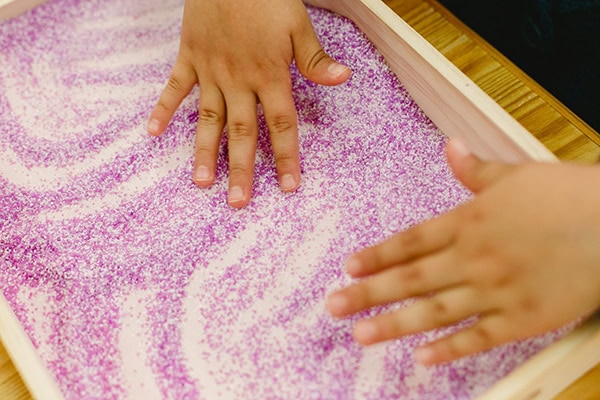
Goal: Develop fine motor skills and confidence in forming letters and simple words.
1. Salt or rice tray writing (above): Spread salt, flour or rice on a tray. Let your child trace letters with their finger or a chopstick. Gently shake the tray to reset.
2. Tracing with water: Use a wet sponge or paintbrush to trace letters on glass doors, bathroom tiles, or corridor floors. Letters vanish as they dry; mess-free and magical!
3. Chalk letter practice: Use chalk to write letters on the corridor floor. Let your child trace or write over them. Remember to clean up with water afterward.
4. Snack lettering: Form letters using cereal pieces or cookies. Eat the letter after naming it.
5. Letter journal: Create a simple notebook with one letter per page. Let your child draw pictures or try writing words that start with each letter.
6. Real-life writing: Encourage writing in real contexts, such as labeling toy bins, helping with the grocery list, or writing thank-you notes for friends and family.
More tips for parents
- Short and sweet. 5 to 15 minutes of literacy play a day is enough when it’s consistent and fun.
- Use everyday materials such as cotton buds, containers, recycled boxes, scrap paper. No fancy resources needed!
- Use your environment. Signs, packaging, MRT maps and brochures can be teaching tools.
- Keep it joyful. Celebrate every scribble, sound, and attempt. It’s about progress and confidence, not perfection.
- Mix things up. Rotate between different games to keep your child engaged.
Cover photo credit: Shutterstock
References
- Early Childhood Development Agency. (2023). Early Years Development Framework (EYDF) [PDF]. Retrieved September 9, 2025.
- Mommy‑Labs. (n.d.). Letter recognition games. Retrieved September 9, 2025.
- National Library Board. (n.d.). Early Read Activity Toolkit. Retrieved September 9, 2025.
- Reading Rockets. (n.d.). Environmental print. Retrieved September 9, 2025.
- Reading Rockets. (n.d.). Letters and sounds: Practical ideas for parents. Retrieved September 9, 2025.
- Reading Rockets. (n.d.). Reading 101 for parents: Phonics and decoding. Retrieved September 9, 2025.
- Reading Rockets. (n.d.). Writing Activities for Your Pre-K Child. Retrieved September 9, 2025.