
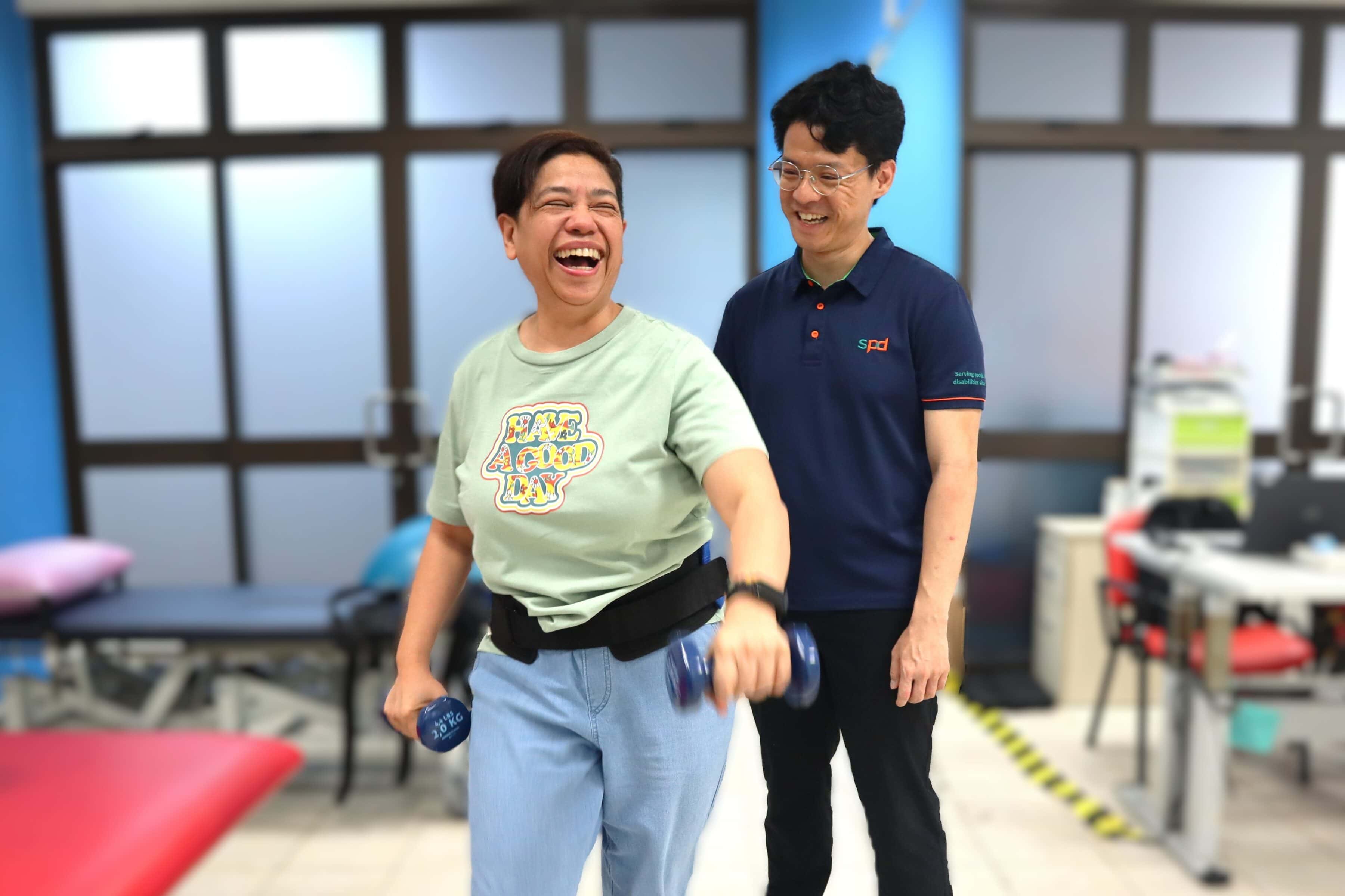
Occupational therapy is more than just rehabilitation. It is about helping individuals regain independence, rediscover confidence and find meaning in everyday activities. For senior occupational therapist Chris Lai, this philosophy has guided his eight-year journey at SPD, where he supports clients in their recovery, mentors younger colleagues and contributes to shaping rehabilitation programmes that meet diverse needs.
In this instalment of the Power of Care series, we find out more from Chris about the challenges and breakthroughs in his work, and the moments of progress that remind him why care makes a difference.
UPDATES: Tell us more about your role as a senior occupational therapist. How does your day-to-day work look like?
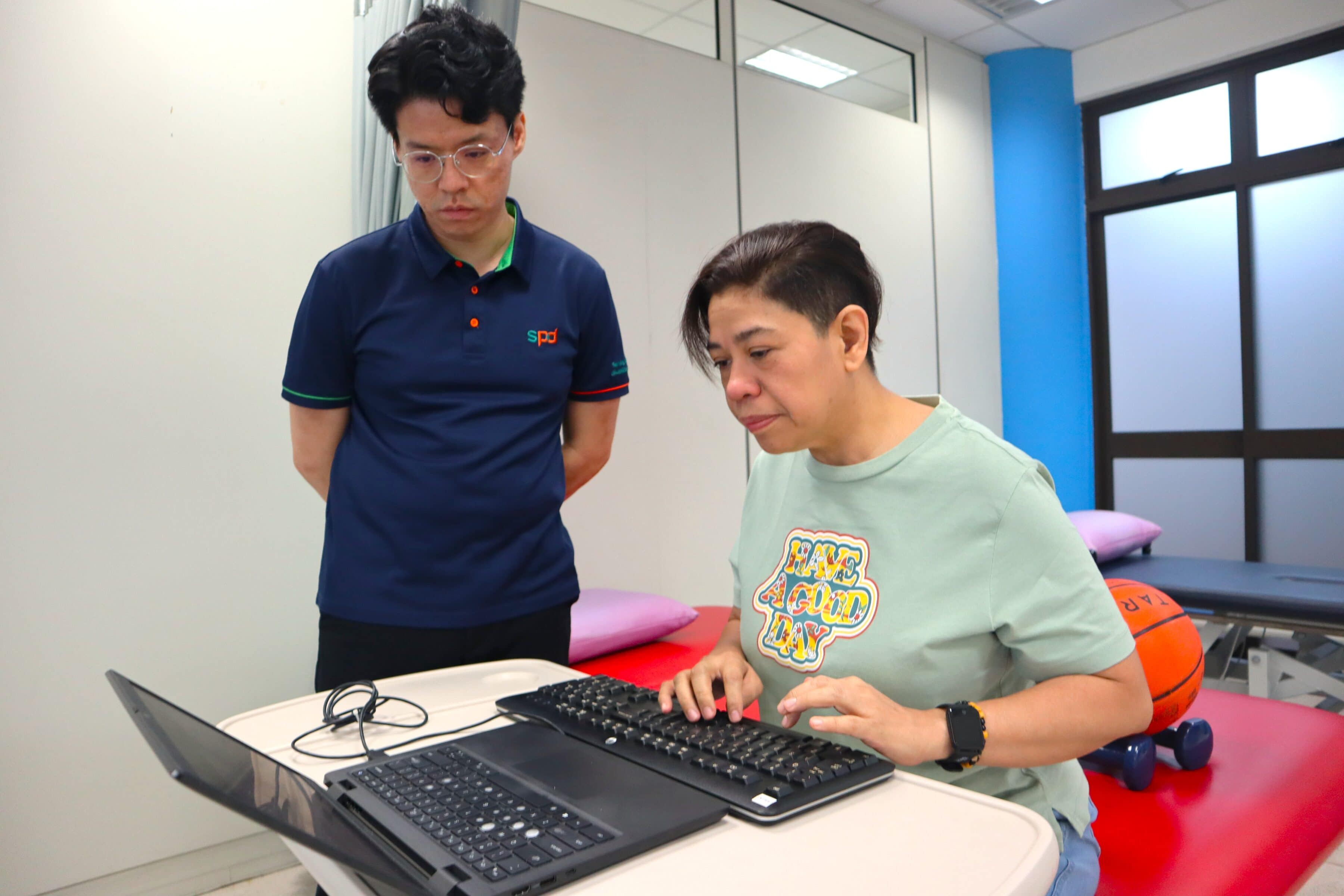
Chris: I am glad to have the opportunity to work in multiple care settings such as dementia day care, day rehabilitation centre, programmes for young adults with autism and employment support services. Currently, I work with clients, and also supervise juniors, support the programme managers in manpower planning and scheduling, and assist the admin team in assessing clients for programme admission.
UPDATES: What are some challenges you face in your work and how do you overcome them?
Chris: Being part of a team to help set up a programme was a difficult yet fulfilling journey. To make better use of our resources, I remember having to explore different approaches as a team, learn from partner organisations and tap on collaborations to better support our beneficiaries.
UPDATES: How would you define “care”? What are some important qualities needed in your role?

Chris: Being person-centered and understanding what matters to clients or their immediate caregivers. Someone once told me that it is hard to relate to people of different ages and backgrounds because we have not lived their lives. In our profession though, the ability to connect with others is a gift. We will never live the same lives as our clients, but even if we cannot fully understand how they feel, being present and walking them through their pain and joy can make a difference too.
At times, clients and caregivers may get upset about slow progress or systemic challenges, and may take it out on us. It is important to remember that it is not personal. Our role is to remain patient and encouraging, while supporting them in making improvements in their rehabilitation journey.
UPDATES: What do you find most satisfying about your job? What is a memorable milestone that you’ve witnessed within the team and/or with your clients?
Chris: When I see clients improve or when there are breakthroughs with clients who have challenging issues. We often conduct group outings – such as visiting places of interest or trying new activities such as swimming or disability sports – to encourage our clients to go beyond their comfort zone. I recall one client who struggled with mobility after a stroke. During an outing to Jurong Lake Gardens, she walked for a full hour, something she had not thought was possible. This experience gave her newfound confidence and helped her realise that she is capable of achieving so much more.
—–
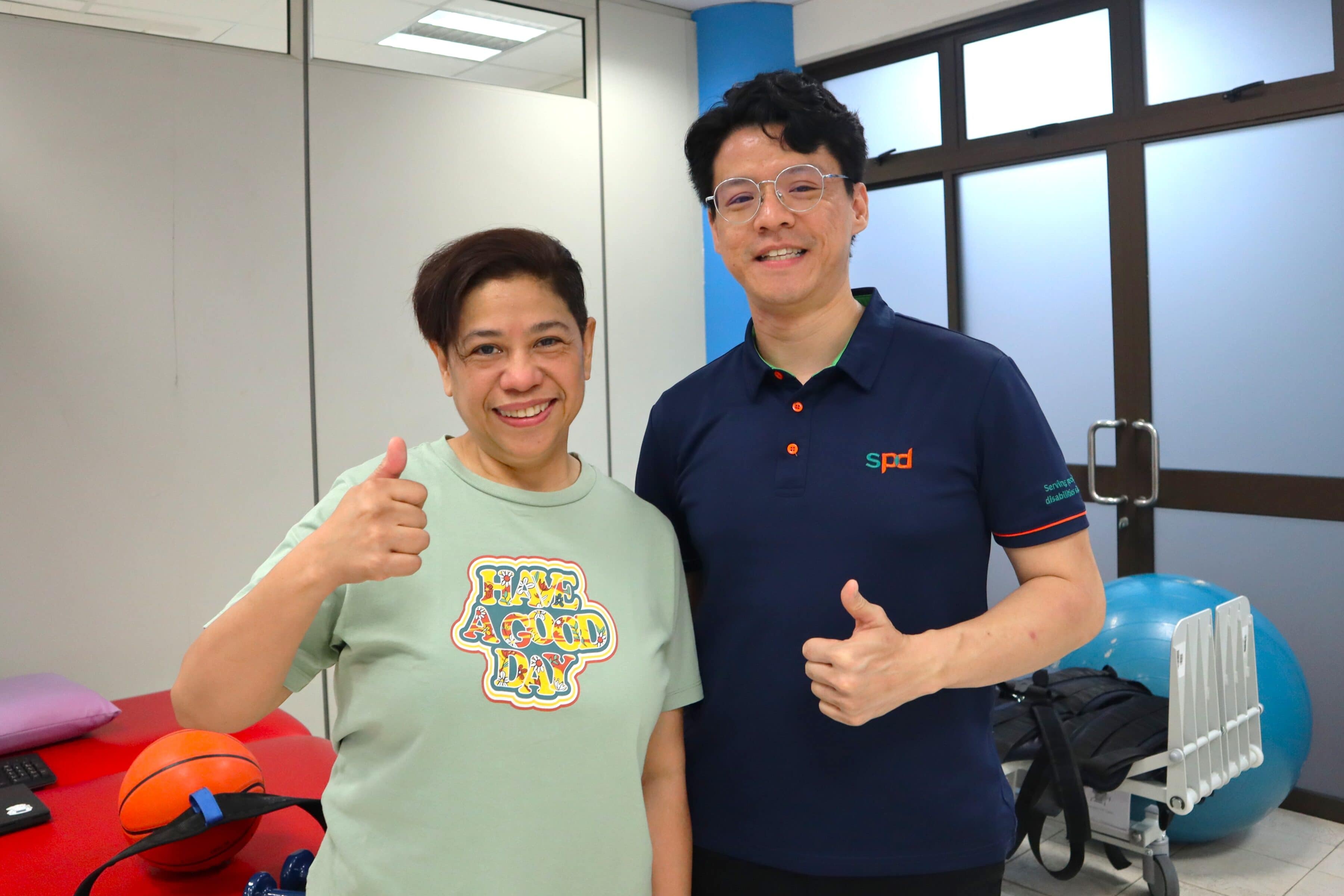
For Chris, the most meaningful part of being an occupational therapist is witnessing clients achieve what once felt impossible. These breakthroughs, whether big or small, reaffirm his belief that with the right support and care, every step forward is a victory worth celebrating. Through dedicated therapists like Chris, SPD empowers individuals to rediscover independence and confidence in their everyday lives.