
Care is more than meeting someone’s needs. It is about connection, empathy and the silent assurance that you are not alone. For individuals and their families navigating the challenges of disability, the right care can be the light in a difficult journey.
At SPD, our professionals embody this spirit of care every day – whether in classrooms, therapy sessions or community spaces. This year, we celebrate their dedication in this Power of Care series where we hear their stories, what inspires them and how care shapes their work.
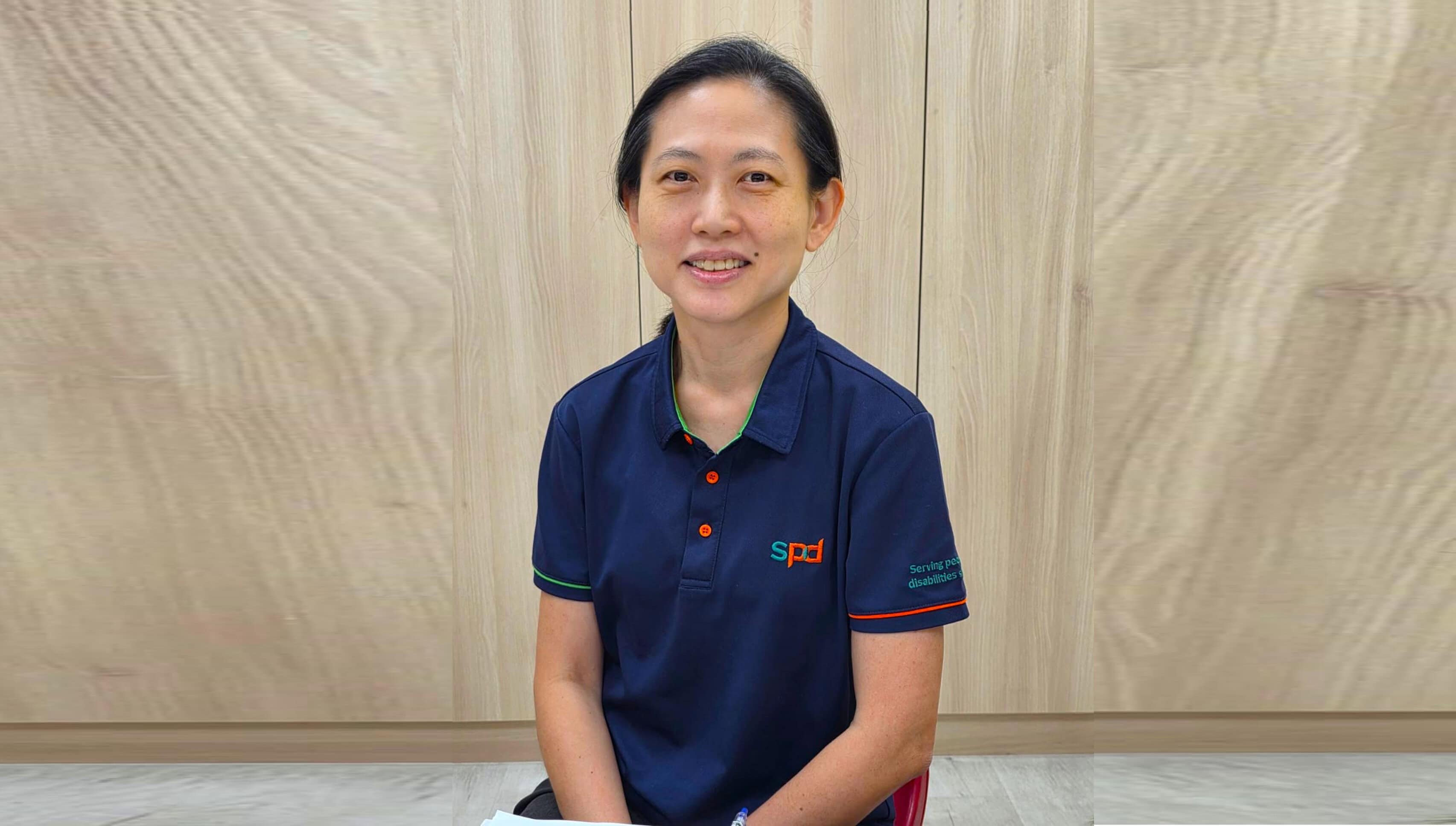
In conjunction with Teachers’ Day, we kickstart the first story of the series with Louisa Mew, an early intervention teacher at SPD@Tampines. After two career transitions, Louisa found a true calling in the social service sector. Though she once hesitated to take the leap, her passion never wavered. Today, she helps children with developmental needs take important steps in learning growth and independence.
UPDATES: What motivated you to become an early intervention educator?
Louisa: Even as I started out in engineering early on in my career, I thought about joining the social service sector. However, I felt I was too young to take up the challenge. I pursued it only years later after leaving the engineering and publishing industries.
Making the transition was daunting, especially for someone in her mid-career and had no relevant experience. But I was happy I made that decision and SPD gave me the opportunity to do that. I have been working at SPD as an early intervention teacher for over 1.5 years now.
UPDATES: How does your day-to-day work look like?
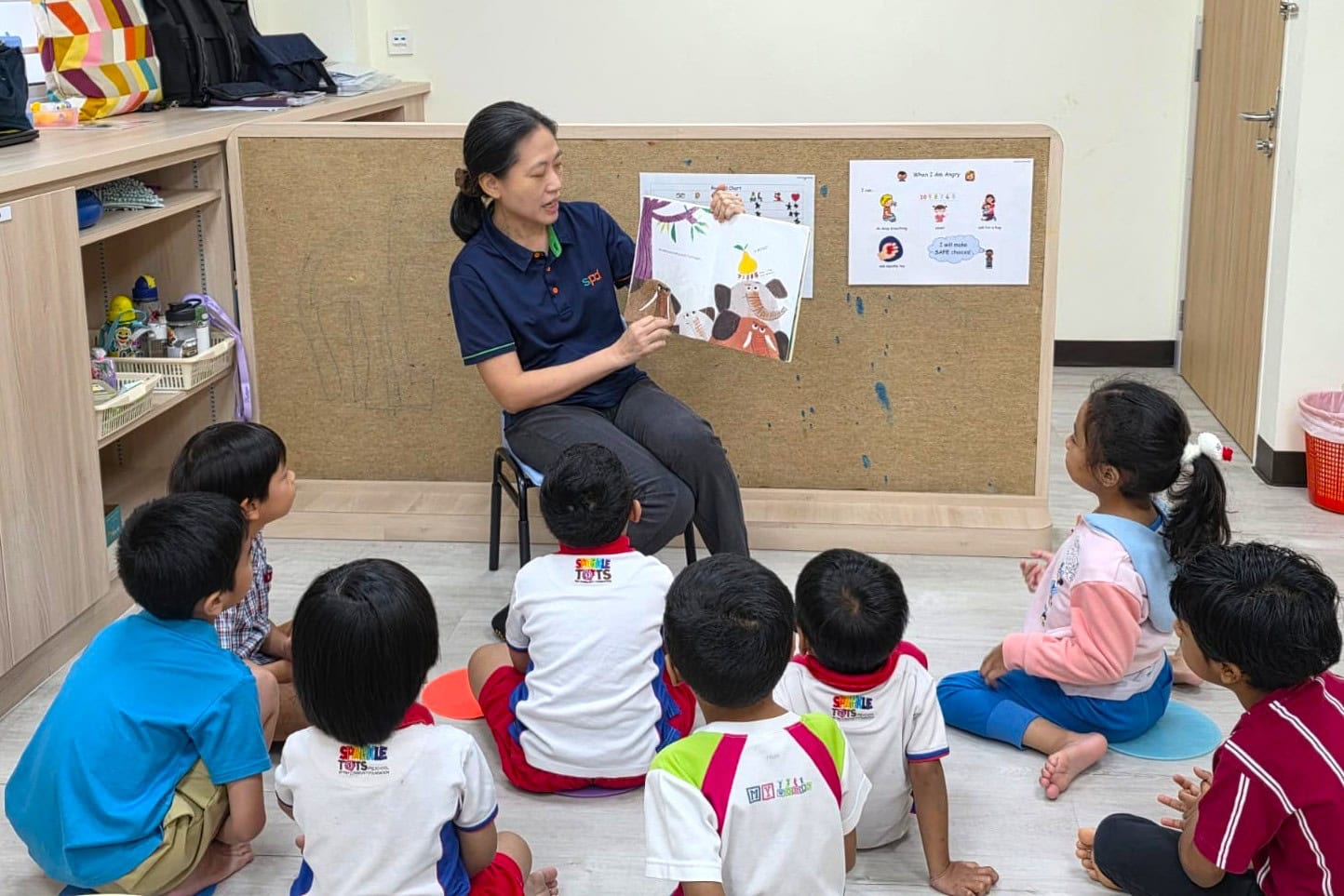
Louisa: Mornings are spent getting ready for class. I will either be conducting the class or supporting my co-teacher during lessons. We guide the children through intervention strategies to help them achieve their goals.
Afternoons are for preparing class materials, reviewing the children’s progress with the team or meetings with caregivers.
UPDATES: What are some challenges you face and how do you overcome them?
Louisa: Behavioural issues can be challenging to manage as every child responds differently to the same strategy. I’m thankful that I can rely on colleagues for advice and to bounce off ideas. I have never felt that I had to face challenges alone.
UPDATES: How would you define care?
Louisa: Care is delivering whatever is needed to benefit the client and their family. It can mean helping a child express emotions, communicate their needs, or simply creating an environment where they feel safe and understood. Recently, we started weekly gym sessions to help the children regulate their emotions and provide another routine in which their goals can be worked on. The team came together to work on the transition, keep them engaged and set goals. These sessions would not have been possible without the contribution of every member of the team.
UPDATES: Can you share a memorable milestone?
Louisa: One boy in my class struggled with social conflict management. Over a year and a half, we used visuals, stories and structured scenarios to guide him. Today, he willingly shares toys with his peers and would ask for permission before taking another child’s toys. Watching his improvement has been very rewarding.
Louisa’s journey shows that care is about empathy, patience, and also courage – the courage to change paths and to commit oneself to making a difference. Through teachers like Louisa, SPD helps children reach important milestones with confidence every day.