
Travelling can require a lot of planning. This is especially so for people with disabilities as every journey to an unfamiliar place demands extensive preparation. For instance, wheelchair users need plan a detailed itinerary with disability-friendly washrooms or train stations with accessible lifts identified.
Despite these hurdles, persons with disabilities should be empowered to travel whenever and wherever they desire.
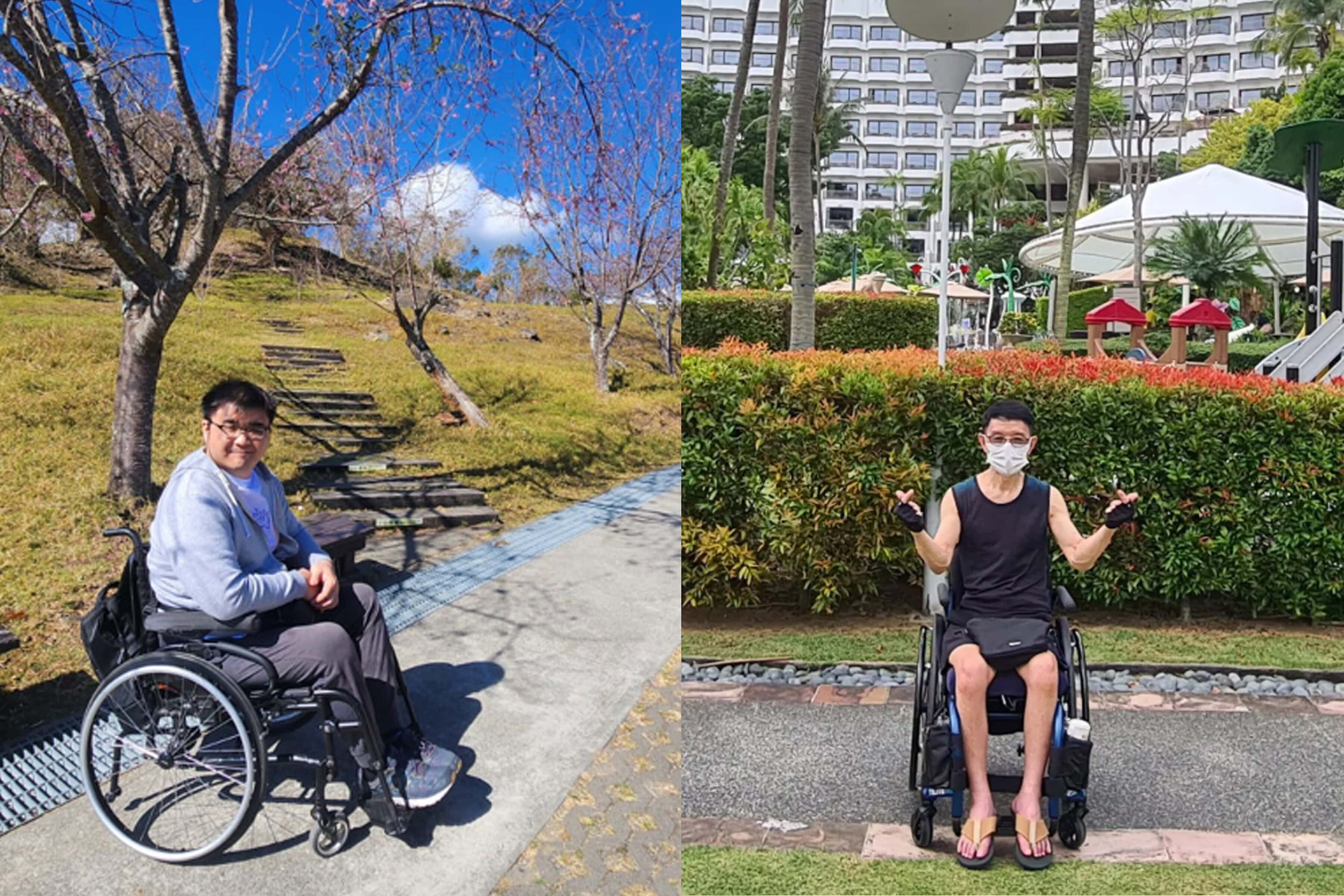
SPD Inclusion Champions Mr Kishon Chong (above left) and Mr Tan Hung Bak share their experience and tips on how they travel as wheelchair users.
UPDATES: Can you tell us more about your condition and how often you used to travel?
Hung Bak: I had a spinal cord injury in 2020 and am now a paraplegic. Prior to my injury, my work required me to travel around Southeast Asia, sometimes up to seven times a year.
On top of that, my family and I travelled frequently for holidays. We would head off to countries like Japan, Korea or even Europe, where our trips would last from about three weeks to a month. About 90 percent of our trips were planned together as a family, from bookings of various transportation tickets, accommodations to dining and itineraries.
Kishon: I had a spinal cord infarction, which is a stroke in the spinal cord, in 2018. Prior to that, I used to travel once or twice a year.
How has the idea of travelling changed for you?
Kishon: Accessibility may mean differently to different people. As a wheelchair user, even leaving the house or going to a new place requires research and planning. It took me a while to build up my confidence to even think about travelling. I spoke with other wheelchair users who have travelled and researched comprehensively on accessible routes and accommodations.
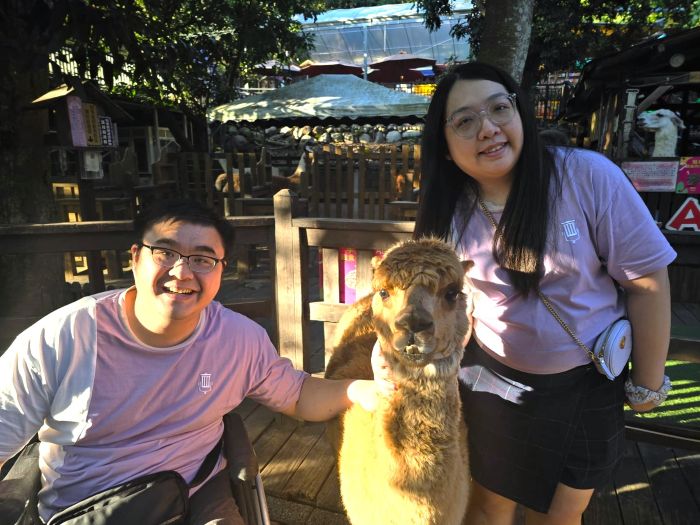
My first “overseas” trip was on a cruise, where it was significantly easier because I did not have to take an airplane. I gradually built up confidence, and went to Japan with my family and Taiwan the year after. Getting proper accessible accommodations and getting support from the airlines definitely helped me.
Hung Bak: In the early stages of my condition, I was afraid to leave the house. There was a big ramp outside my house. After a while of discussion and planning with the Town Council, this was resolved, and I was able to enter and leave my house on my own.
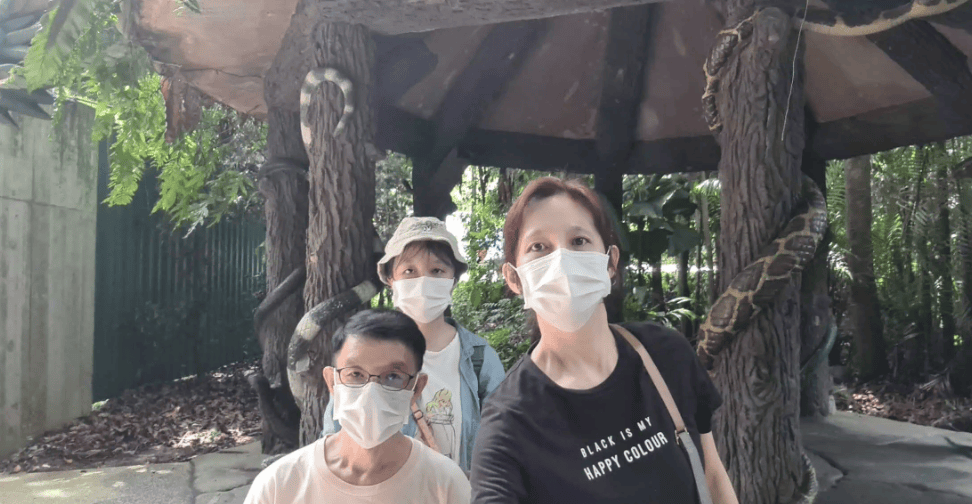
I took some time before I took the leap of faith to start travelling again as it requires intensive planning now. During the COVID19 pandemic, I saw many people try out new hobbies and thought, “why don’t we start small, by going for a staycation?”. We chose a hotel located on Orchard Road as a trial run to see how the experience would be. It was intimidating at first, but knowing we could always head home if things didn’t work out gave us the confidence to try. It turned out to be a great decision, as we enjoyed our time as a family. This became the first of many staycations and trips that came after that.
How is it like for you to travel now?
Kishon: Travelling is still something that I thoroughly enjoy. Prior to my disability, trips were more spontaneous. Now, the researching and planning part of the process is more extensive but still very fun and fulfilling. I look forward to travelling soon despite the required time and effort needed to prepare for a peaceful and seamless journey.
Hung Bak: I’m thankful that my family is always ready to support me. We have come a long way, from only venturing around Singapore to now being able to explore new countries together. Technology such as GPS and AI has streamlined our travel planning. For example, I can easily find wheelchair-friendly places overseas.
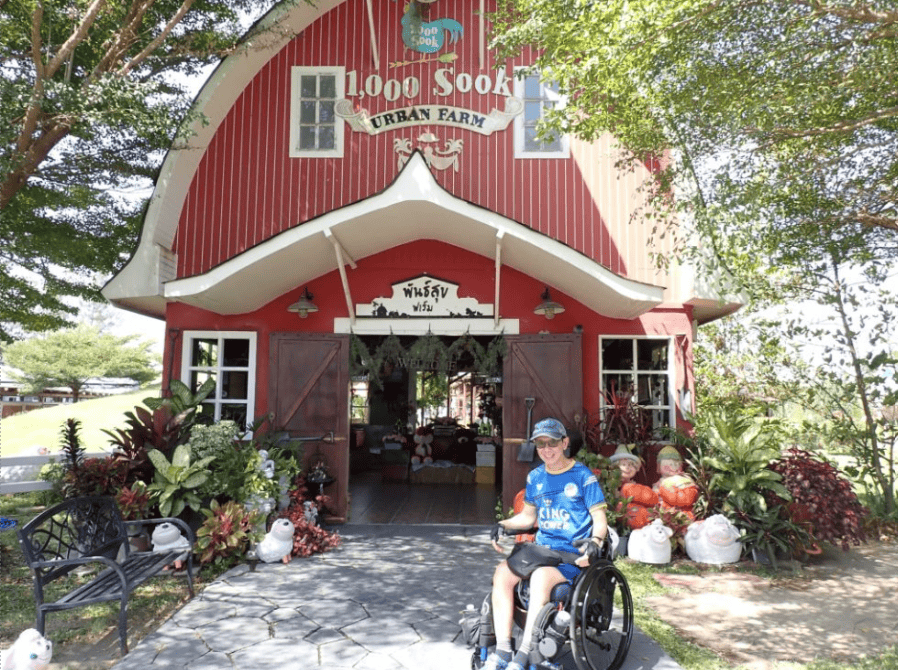
However, I still need to be mentally prepared for unexpected events. We have to prepare and pack more medical items just in case we could not get them locally. For example, my wife and I had to visit a Taipei hospital and local pharmacies for medical supplies during our recent visit.
Did you have any interesting experiences during your travels?
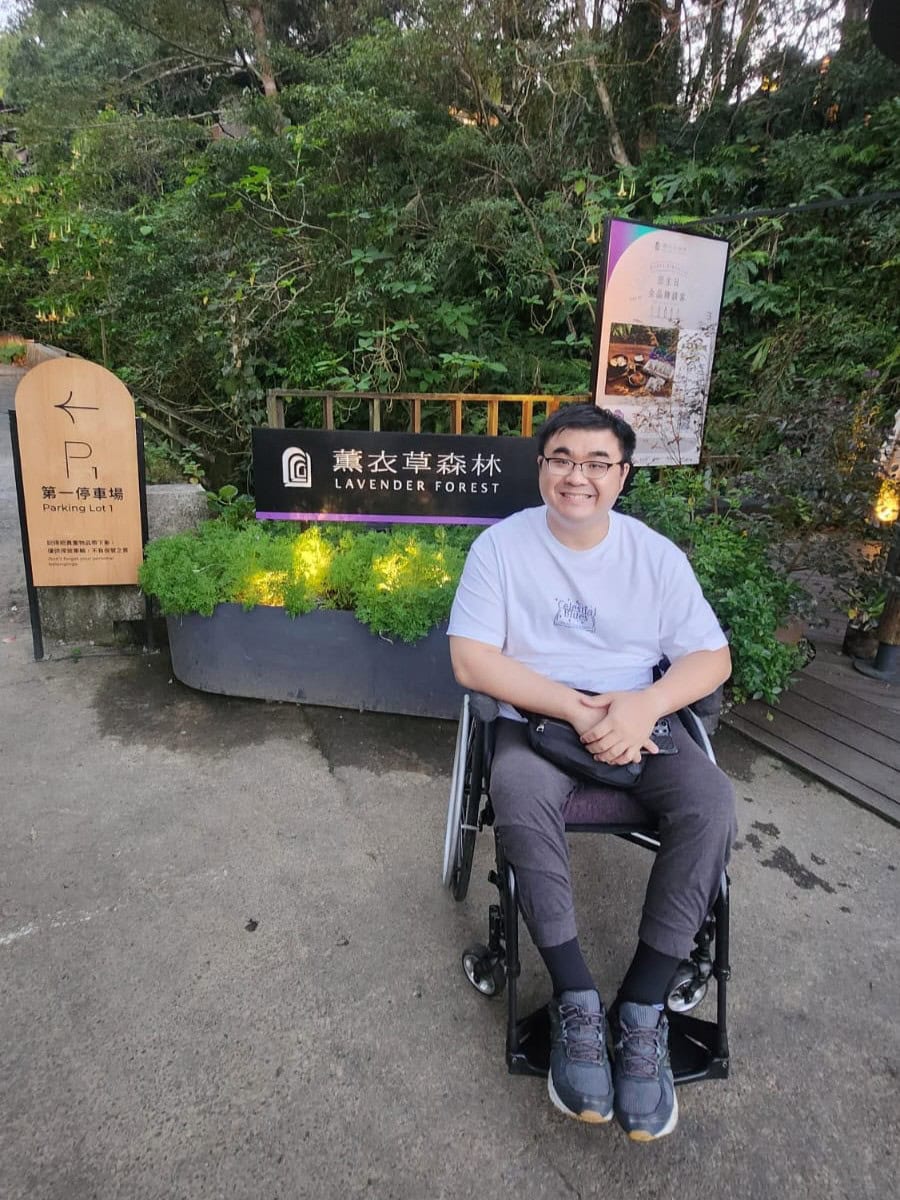
Kishon: In the photo below, I was at Lavender cottage in Taiwan. When I read online, I was surprised that they had a fee waiver for people with disabilities and one caregiver. I was impressed with their inclusivity. When we arrived, there were a few slopes near the entrance that were still manageable. However, when we tried to venture further in, the slopes became very steep, and getting to the restaurant at the peak was impossible. I had to ask my then-partner to go up to help buy a drink. Of course, every travel experience is different. What’s most important is to be flexible and be okay if something does not go as plan.
Hung Bak: Crew members have been helpful towards my family and myself. I recall a trip where I was the last to embark. One of the flight attendants kindly helped us by taking our belongings down from the overhead compartment and carrying them all the way to the aircraft bridge. This extra step meant my wife did not have to juggle the hand-carry bags while ensuring that I got off the plane safely. That act of kindness made our journey especially touching and pleasant.
Do you have any tips for those with disabilities who are thinking about trying out travelling for the first time?
Kishon: If you are travelling by plane, it is important to remind the staff that you are a wheelchair user closer to the date and the type of help that you require. The staff are constantly changing shifts, so they might miss crucial information that could help you have an easier trip. The services provided on full-service versus budget flights also differ, as budget airlines might require additional costs.
Hung Bak: It is important for us to voice our needs early in advance. I would encourage wheelchair users to bring a simple repair kit. For example, for wheelchairs with air-pumped wheels, it would be handy to bring a portable air pump to keep the wheels going.
Also, we should keep ourselves comfortable physically. As a paraplegic, sores are quite common. Some movements every few hours would be beneficial to our health.
+++++
Kishon’s and Hung Bak’s stories have shown that having disabilities does not mean not having the opportunity to live adventurous lives. While initial fears and the reality of navigating an inaccessible world can be scary, their experiences show us that with detailed planning, strategic use of technology and the unwavering support of family can bring boundaries closer together.
Photos credit: Mr Kishon Chong and Mr Tan Hung Bak