

International Wheelchair Day falls on 1 March and it celebrates the positive impact that wheelchairs have on the lives of those with mobility challenges.
Mobility contributes significantly to an individual’s quality of life, as it plays a crucial role in enabling participation in various areas such as activities of daily living (ADLs), instrumental activities of daily living (IADLs), work or productive activities, and play or leisure. It is necessary for maintaining independence, allowing individuals to engage in these activities, which in turn helps foster a positive self-image.
Maximising mobility can greatly enhance one’s overall well-being and sense of autonomy. For individuals with limited mobility, wheelchairs provide not only independence but also dignity, granting access to opportunities that might otherwise be out of reach.
However, choosing a suitable wheelchair can be overwhelming. With various types and designs, from manual and electric wheelchairs to reclining and transport models, each caters to different needs. Factors such as upper body strength, portability, weight capacity and postural support play a huge role in determining the best fit.
In this article, we explore the different types of wheelchairs, their benefits and considerations for selecting the right one, with the professional input of SPD’s senior occupational therapist, Ong Yu Yuan.
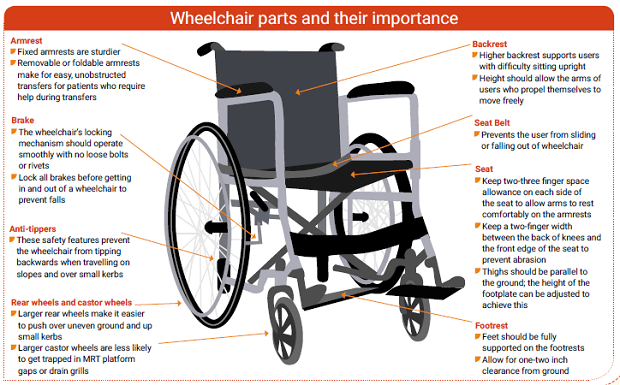
Manual or self-propelled wheelchairs
A manual wheelchair is ideal for individuals with sufficient upper body strength to propel themselves. These wheelchairs have large rear wheels fitted with push-rims, allowing users to move independently. They are also usually fitted with handles at the back so that a caregiver or companion can assist with pushing when needed.
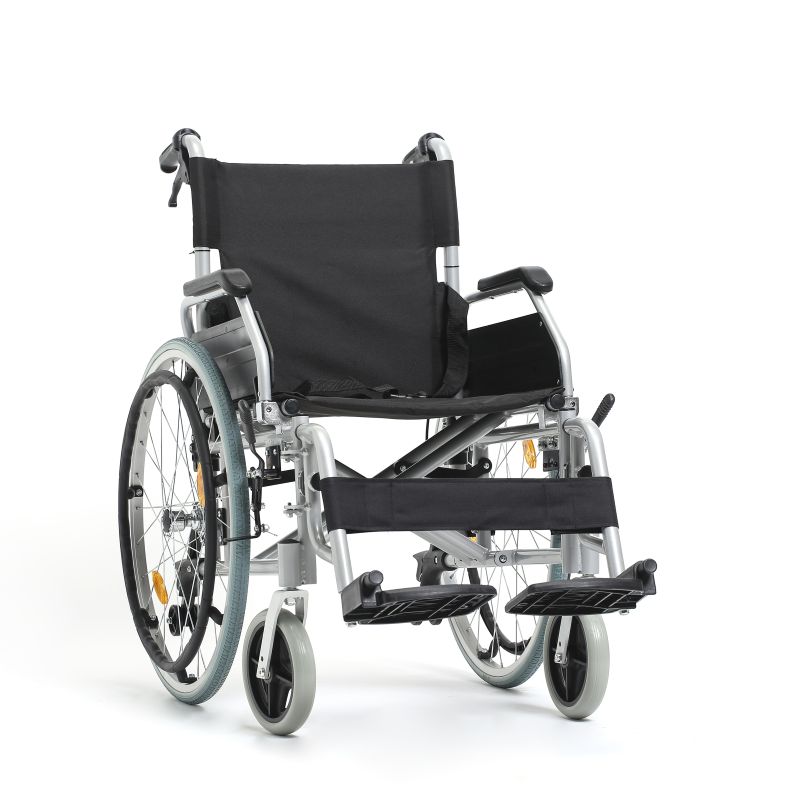
While these wheelchairs are foldable and easy to transport, they require considerable upper body strength and may cause fatigue when used for extended periods without assistance.
Unlike standard self-propelled wheelchairs designed for general mobility, active wheelchairs are engineered for performance, agility, and a more dynamic lifestyle. These wheelchairs are commonly customised for use by athletes and individuals who engage in sports, outdoor activities, or require a high degree of maneuverability in daily life. What sets them apart is their lightweight yet durable frame, often made from aluminium or carbon fibre, which enhances speed and ease of propulsion. The rear wheels are angled, or cambered, to provide better stability, especially during sharp turns and high-speed movements. The front wheels are typically smaller to allow higher degree of maneuverability. These configurations make the active wheelchair more tippy than standard manual wheelchairs and users will need good strength and skill to control the active wheelchair.

Additionally, the parts of active wheelchairs can usually be taken apart for ease of transport in the boot of a car, as well as highly customisable, allowing users to adjust seat positioning, backrest height, and wheel configurations to suit their specific needs. Whether it’s for wheelchair basketball, tennis, or simply navigating spaces with greater efficiency, active wheelchairs offer users increased independence, control, and a seamless extension of their movement.
Pushchairs, however, may look like a manual wheelchair. However, pushchairs have smaller rear wheels and require a caregiver to push. It is not possible for the user to self-propel.

The pushchair frame is usually smaller and slightly lighter at 10kg to 15kg, compared to a manual wheelchair, which can weigh up to 20kg. As the pushchair is smaller and lighter, it may be less stable, making it more difficult to maneuver over uneven ground.
Electric or motorised wheelchairs
For those with limited upper body mobility3, strength or endurance, an electric wheelchair can be an option. These devices allow users to move using a joystick or other adaptive controls.

Some benefits include reduced physical strain and fatigue. This reduces the risk of shoulder overuse injuries and potentially allows the individual to use it for longer periods daily. The electric wheelchair is typically larger than the manual wheelchair and needs more space for maneuvering. They are also less portable and require maintenance of the electrical components.
Empowering Mobility for a More Inclusive Future
By understanding the different options available, individuals and caregivers can make informed choices that support greater independence and well-being. It is important to consult a professional to assess the most suitable wheelchair based on individual needs and to receive proper training. Users and caregivers should be educated in safe and effective use, especially for motorised wheelchairs. With the right support and training, your wheelchair can help you lead even more fulfilling and self-sufficient lives.
References
https://drivedevilbiss.com/en/news-artikel/2024/electric_wheel_chairs_tips_advantages_worth_knowing
Karma Medical (2021) The Benefits of a Reclining and Tilting Wheelchair
Momentum Healthcare. (2021). The Benefits of Using an Electric Wheelchair
The Golden Concept Wheelchair vs. Pushchair
Medical Asisstance4U (2022) What are the differences between wheelchairs and pushchairs?