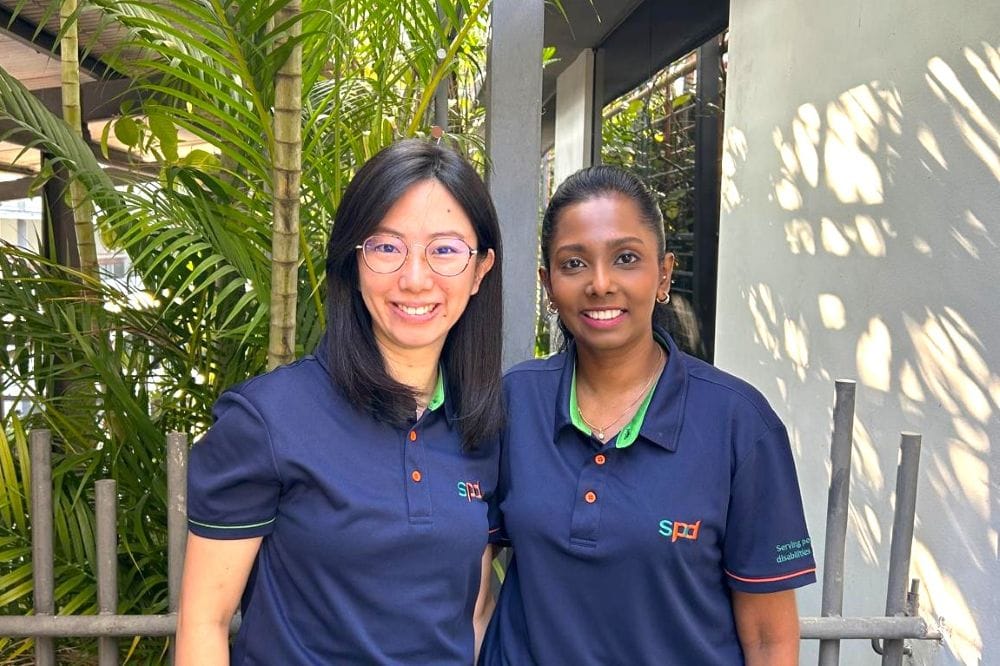
Meet Andrea and Rebecca, two professionals on a mission to build inclusive workplaces.
Andrea Nandini became a job coach three years ago, driven by her belief that individuals in vulnerable circumstances can thrive when empowered with self-reliance and independence.
In her role, Andrea has witnessed her fair share of challenges that people with disabilities face when seeking employment. These include inaccessible commuting routes or workplace, and a lack of understanding among supervisors or co-workers on how to support employees with disabilities.
Thankfully, no one tackles these challenges alone. At SPD, job coaches like Andrea work closely with different professionals such Rebecca Tay, who is an occupational therapist, under the multidisciplinary Employment Support Programme. Together, they provide holistic support to both jobseekers and employers to foster more inclusive work environments.
Rebecca often joins Andrea on worksite visits, not only to assess accessibility, but also to recommend job accommodation that make employment sustainable and empowering for clients.
So, what do these inclusion champions carry with them every day? UPDATES takes a peek inside their bags to discover the tools of their trade.
Measuring tapes, notebooks and pens
Rebecca: A measuring tape comes in handy when we need to modify physical workspaces to enhance comfort and accessibility. This includes modifying seating or adjusting the height of the workstations. Ergonomic tools or mobility aids can also help some perform carry out their roles more comfortably and effectively.
Andrea: I always carry my notebook and pen (below) to jot down observations and feedback during visits. These notes help when we discuss solutions with our internal team, especially for clients who may need assistive tools or customised adjustments.

Andrea: My LED writing pad (below) comes in handy when communicating with clients who are hard of hearing. Sometimes clients might need more detailed or simplified instructions, so I’ll use it to draw diagrams to help them understand better.
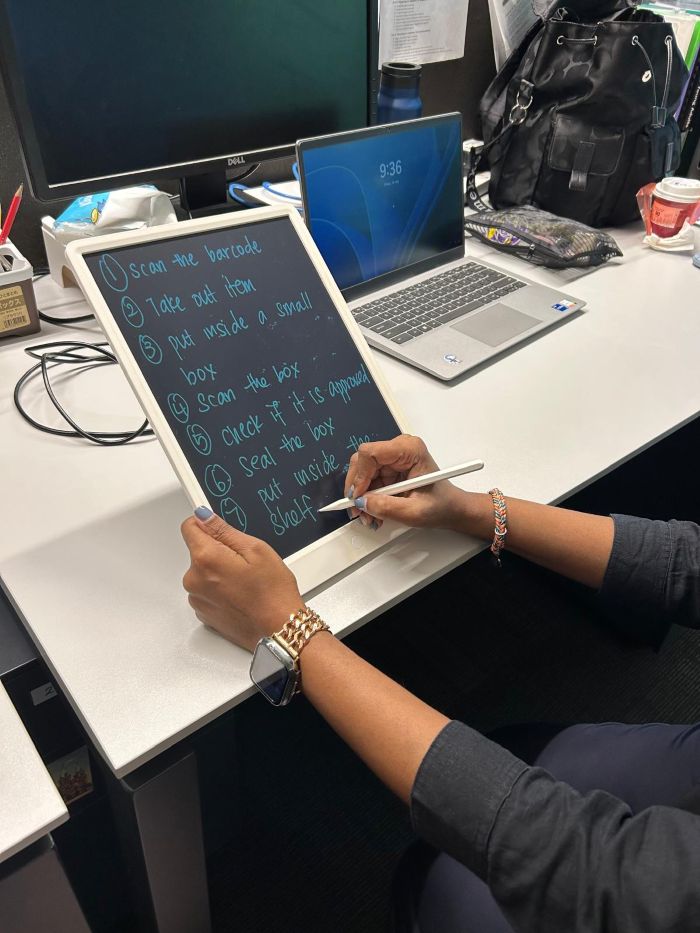
Rebecca: Communication in inclusive employment goes both ways. Some employers may be willing but unsure about know to communicate or engage with employees with diverse needs. Hence, written instructions and visual aids can help reduce misunderstandings within the workplace and bridge that gap.
Mobile phone and portable charger
Andrea: My mobile phone is a must-have in my bag. I take photos of the commuting routes to ensure that these routes are accessible, such as having ramps and shelters for wheelchair users or are located near MRTs for those with mobility issues. These visuals help clients navigate new environments more confidently.
Rebecca: I rely on my mobile phone to stay connected with colleagues in real-time. Our team is always just a message away if I need any quick consult during a site visit.
Observing eye and flexible-thinking hat
Andrea: No two site visits are alike. It is important for us to think on our feet, tailor our recommendations to each environment and individual.
Rebecca: I’ve visited offices housed in rented or shared spaces, where modification and renovation such as widening doorways, installing ramps, or reconfiguring workstations were not possible. In those cases, we might recommend alternative solutions, such as remote work arrangements, flexible work hours to avoid peak hour travel, or job tasks redistribution within the team.
Portable fan, water bottle and umbrella
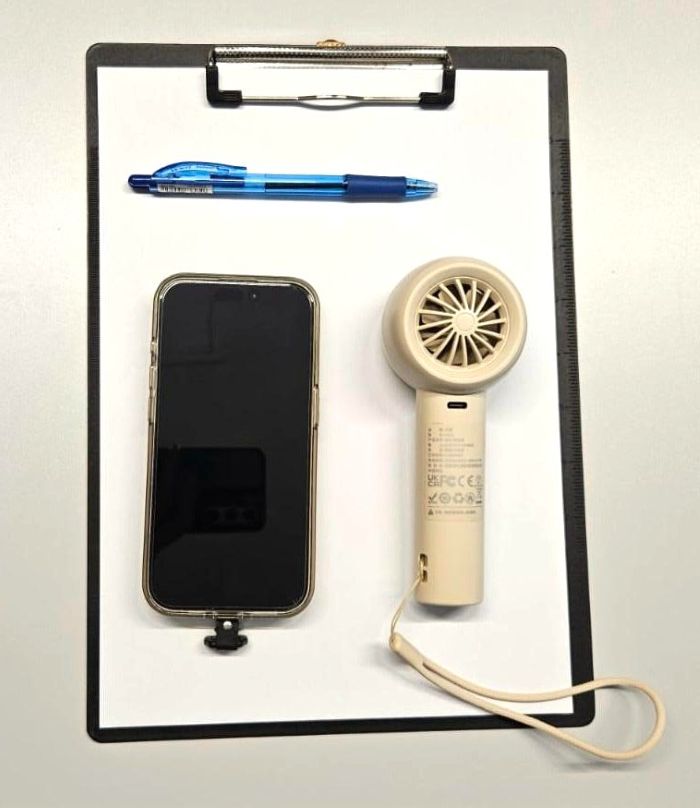
Both Rebecca and Andrea agree – site visits under Singapore’s unpredictable weather call for hydration, shade and cooling tools. Staying prepared helps them focus on what truly matters: supporting their clients and employer partners effectively.
Paving the Way for Inclusive Employment
Inclusive employment is more than just empowerment – it’s about empowerment, dignity and unlocking human potential. The dedicated work of professionals like Andrea and Rebecca helps break down barriers and build confidence on both sides of the hiring equation.
As more employers and employees are equipped with the right knowledge and tools, we move one step closer to a society where everyone – regardless of abilities, has the opportunity to thrive at work.